


After Japan made it easier for travelers to enter the country, more tourists began visiting Japan. However, a small number of travelers have taken advantage of this to break the law — sneaking in to work illegally, smuggling drugs, and committing other offenses that have made headlines. Recently, more travelers have been held at immigration checkpoints and shared their experiences on social media, leaving many people worried about whether they might be detained, or unsure how to behave in order to pass through smoothly. This is especially worrying for anyone visiting Japan for the first time.
So, how do you avoid trouble at Japanese immigration?
Actually, the most important thing when passing through immigration in any country is whether the immigration officer trusts you. The final decision rests entirely with that one officer. So the key to passing through immigration comes down to one simple thing: making a complete stranger believe you — believe that you are simply a tourist who has come to see their country. That's really all there is to it.
Before we get into the tips, here's a general idea of what an immigration checkpoint looks like, for anyone who hasn't traveled abroad before. The process is similar in most countries, including Japan. If you've traveled internationally many times already, feel free to skip this paragraph. At immigration, everyone entering the country lines up at designated counters, usually split into two lines: one for Japanese nationals and one for foreign visitors. Passengers from every airline and country line up together on the foreign visitor side. An officer sitting in the booth will take your passport, check it in the system, scan both index fingers, take your photo, and may ask you a few casual questions before stamping your passport and welcoming you to Japan. With hundreds of thousands of travelers passing through immigration every day, most people move through quickly, regardless of nationality. Only a small number of travelers who seem "suspicious" to the officer might be asked further questions, asked to show documents, or even taken to a separate room for additional questioning.
So the question is: how do you make the officer believe you're really there to sightsee? In this article, we've gathered widely recommended tips that have worked well for getting through Japanese immigration smoothly, as well as things to avoid, based on the experiences of travelers who have been held up at immigration, so you don't make the same mistakes.
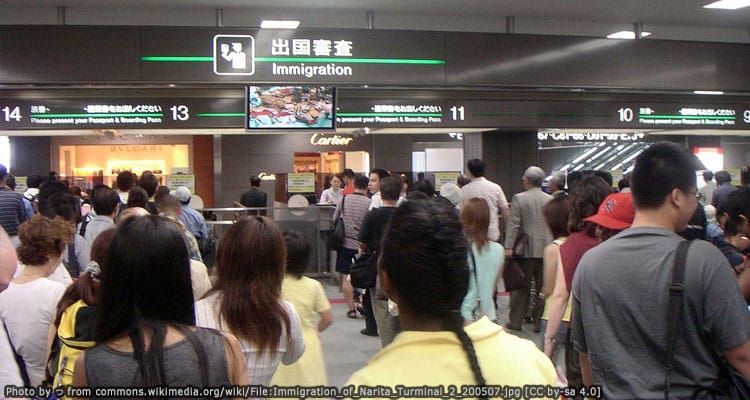
Photo by っ from commons.wikimedia.org/wiki/File:Immigration_of_Narita_Turminal_2_200507.jpg [CC by-sa 4.0]
Here are the nine tips that will help you get through Japanese immigration with ease.
1. Stay Relaxed and Cheerful
You're finally visiting the country you've planned and waited for — so relax and look cheerful. There's no need to worry too much; just stay casual and natural, the way any tourist would.
2. Make Eye Contact
When you hand your passport to the immigration officer, look at them normally. Don't avoid eye contact or act suspicious. Say "hello" if you'd like. Be friendly, make eye contact, and smile naturally. If they ask you something, answer naturally, the way you would in an ordinary conversation.
3. Speak Clearly and Confidently, Without Overreacting
When talking with the officer, answer naturally. It helps to practice a little English beforehand. There are only a few common questions, such as: What are you here for? Where are you going? Where are you staying? How many days? Who are you traveling with? If you don't understand a question, just ask them to repeat it, like a normal conversation. If your trip coincides with a specific festival or event, feel free to mention it.
4. Dress Appropriately
This doesn't mean wearing a suit and tie. Just dress appropriately for the season — a warm jacket in winter, for example — and look like a tourist: carry a camera, wear sunglasses, sneakers, and so on. Avoid dressing as if you're on your way to a work site.
5. Fill Out the Arrival Card
Fill in the arrival card completely and accurately. This isn't difficult — it's best to fill it out on the plane so you're not rushed later.
6. Traveling as a Family? Submit Your Passports Together
If you're traveling with your family, immigration will almost always let you through without issue. So if you're traveling with your parents or children, submit your passports together — as long as you share the same surname, this should go smoothly.
7. Prepare All Your Documents
About 90% of travelers won't have any issue — the officer checks your face and your passport, then stamps you through. Some may ask a few routine questions. But if any of your answers don't match what they expect, or if they become more suspicious, you'll notice they repeat the same question. This means they don't believe your earlier answer. At this point, take out any documents you've prepared and show them. Whatever they ask about, show the matching document: for accommodation, show your hotel booking; for length of stay, show your return flight ticket; for your itinerary, show your travel plan. That's why you should carry these documents with you, and also know your rough itinerary — how many days you're staying, where you're staying, the hotel name, and what places you plan to visit.
Don't be alarmed at this stage — it's completely normal for an officer to check your documents. In fact, they might not even look closely; they may just want to confirm that you actually have documents to show.
8. Traveling With Friends? Agree on Your Answers Beforehand
If you're traveling with friends — whether classmates, neighbors, coworkers, or anyone else — and you're all questioned together, expect additional questions, such as how you know each other, how close you are, how long you've known each other, what your friends do for work, and where they live. If your answers match, it should go smoothly. If they don't, the chance of being held up increases significantly. It's usually better if just one person is questioned at a time. If possible, let the friend with the best English skills, the best knowledge of the trip details, and the most travel experience go through first. Once they've passed, they can point back and confirm how many people are in the group and who they're traveling with, which makes things easier for everyone else.
9. Traveling Alone or Questioned by Yourself
Even if you're taken into a separate room for questioning, there's still a good chance you'll be allowed through if you can change the officer's mind and earn their trust. Any documents related to your identity and background can help a lot here. For example, proof of employment — whether you're a salaried employee, freelancer, or business owner — such as an employee ID, an employment certificate from your company, or, if you're a freelancer, samples of your work or proof of income. Students can show proof of enrollment or a school certificate. Most travelers never get to this stage, and while your chances of being sent back increase significantly at this point, officers will still usually give you a chance to explain yourself and show evidence. So if you have anything that could help convince them you're truly there to sightsee, this is the time to use it — it may be your last chance.
That covers our 9 tips for getting through Japanese immigration smoothly. Following all of the advice above should help you pass through immigration in Japan, or anywhere else, more than 99% of the time. Even so, you should stay realistic. As mentioned at the beginning of this article, whether you pass or get held up ultimately depends on the judgment of the single immigration officer who checks you. Even if you have a legitimate job and are genuinely there to travel, none of that matters if the officer simply doesn't believe you. And since immigration officers are human, perfect consistency is impossible. Mistakes happen, moods vary, and biases exist. So even if you do everything right, you might still have bad luck, as has happened in a number of cases you can find shared online.
That said, while this may sound worrying, the chances of it happening are extremely slim — almost like winning the lottery. If you ever do get held and sent back, try to stay calm and not stress too much. Just chalk it up to bad luck, or look at it positively: you'd be one in a thousand, or even one in ten thousand. Maybe you'll actually win the lottery once you're back home! (Just kidding.)
In any case, we hope everyone reading this article gets through Japanese immigration smoothly and quickly — in just two minutes.
As a final note, in case you're curious about what happens if you're sent back: it's not a pleasant experience. You'll be held in a large holding room or a separate room, depending on the airport, usually along with other travelers who are being sent back. You'll wait until there's an available seat on a flight, and you'll have to cover the cost of your return ticket yourself. While you wait, your luggage will be brought to you, and you'll be given some food, roughly three meals a day.