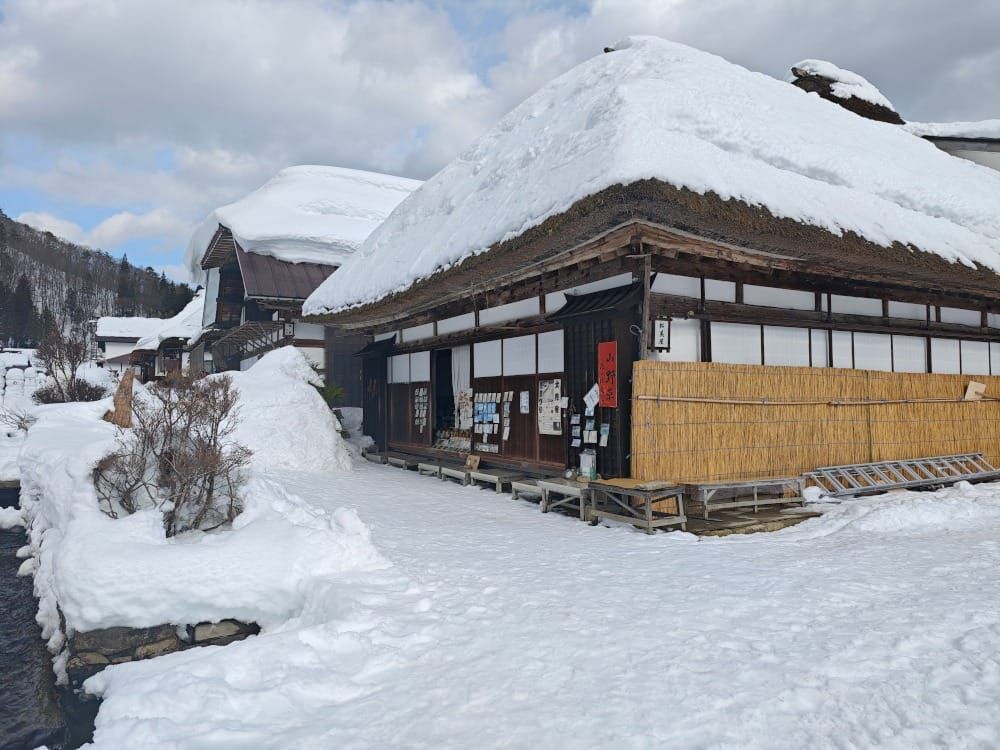


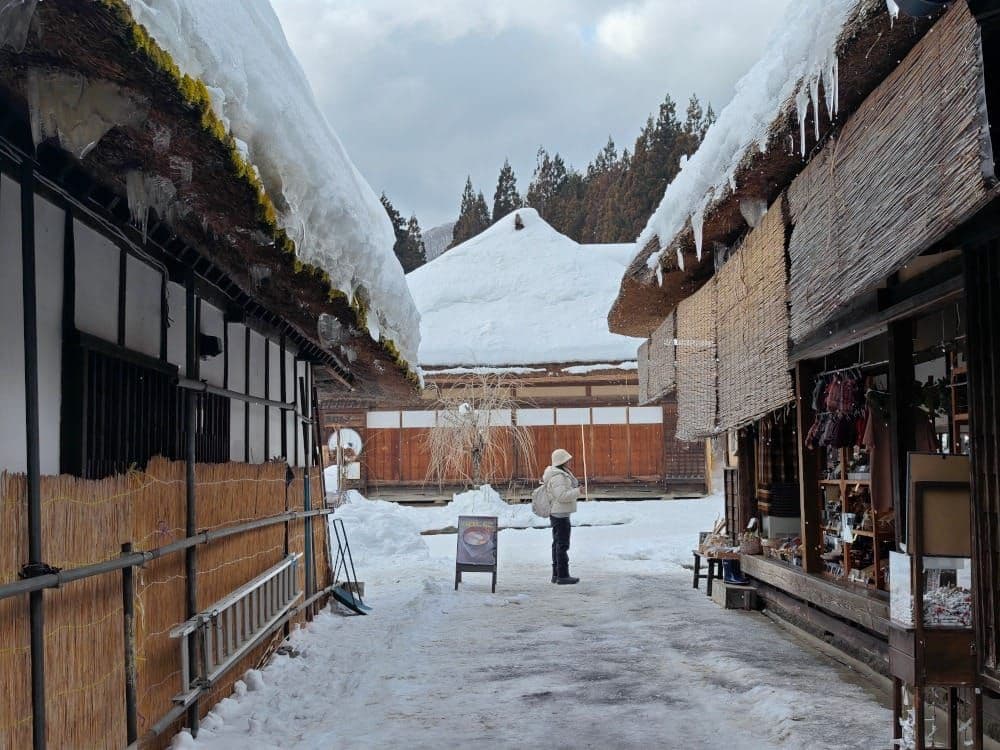


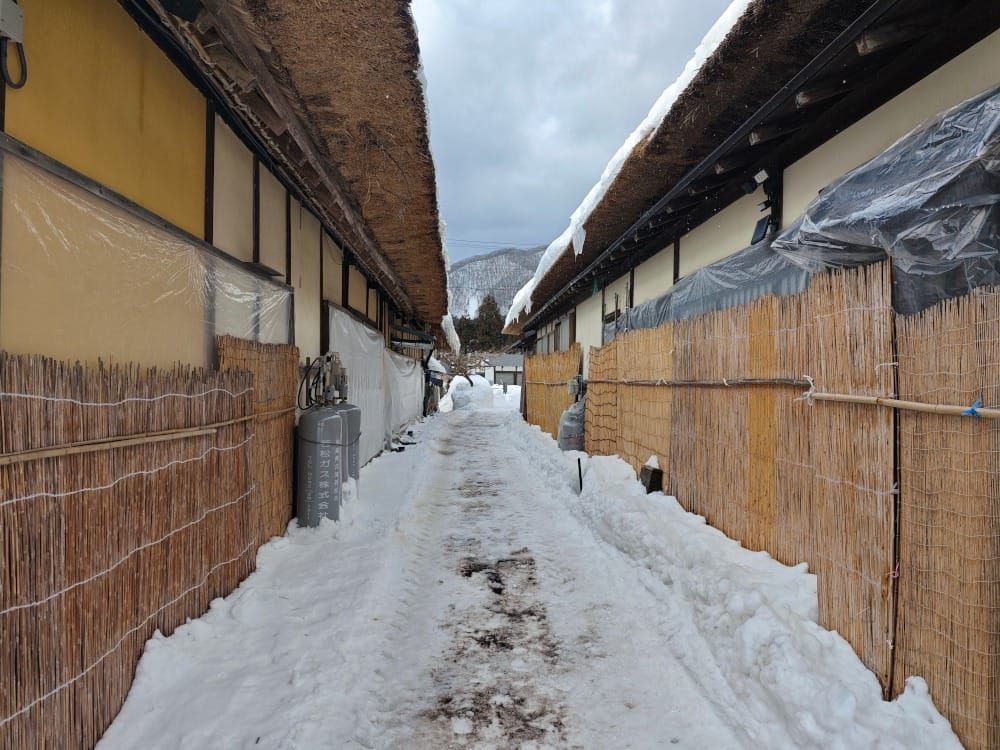
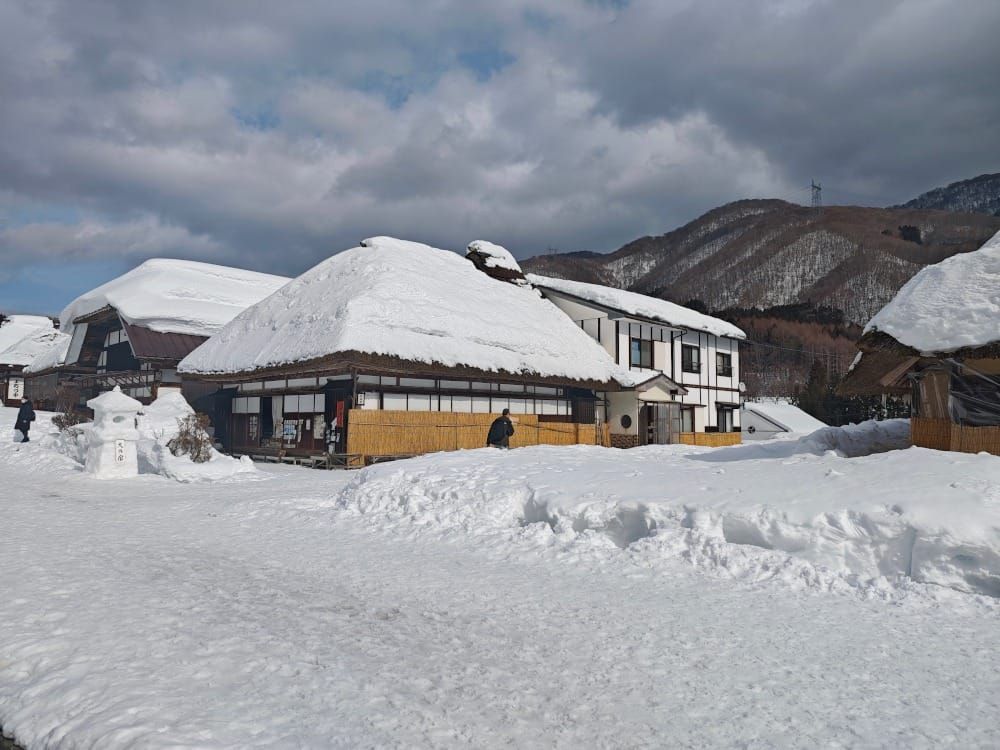
On this trip we drove to Ouchi-juku specifically to see snow, and we found it so fluffy it looked like someone had draped a white blanket over the whole village, with thatched roofs lined up along both sides of the street. On calm days the whole village falls silent, and as you walk you can hear the snow crunch under your shoes — a warm feeling despite the cold.
The village is just one main street, so it's easy to walk without much planning. Its charm is that every angle looks beautiful as you stroll along, especially when snow piles thick on the roofs like icing on a cake.
Getting There by Car: Routes and Parking
We like driving ourselves because winter travel is flexible — you can stop wherever you want or head back early, and the scenery along the way around Aizu / Minamiaizu is so pretty you end up driving slowly the whole time.
- Approximate distance (by car)
- From around Aizu-Wakamatsu: about 50-60 minutes (depending on your starting point)
- From Shirakawa I.C. (Tohoku Expressway): about 75 minutes
- Parking: there is paid parking, and most spots are 500 yen for a regular car
- We recommend having cash ready, since you pay on site
- Hours (winter): the parking area/tourist information point often adjusts its hours in winter (one example we saw was about 8:30-16:30)
- Tip: go early in the morning — the light is beautiful, it's not crowded yet, and the snow is still "fluffy" rather than slushy, but shops may not be open yet
Strolling + Must-Capture Photo Spots
If you're wondering what there is to do here, for us it's simply walk, photograph, eat, repeat — and we're very happy with that.
Spots we think are popular and shouldn't be missed:
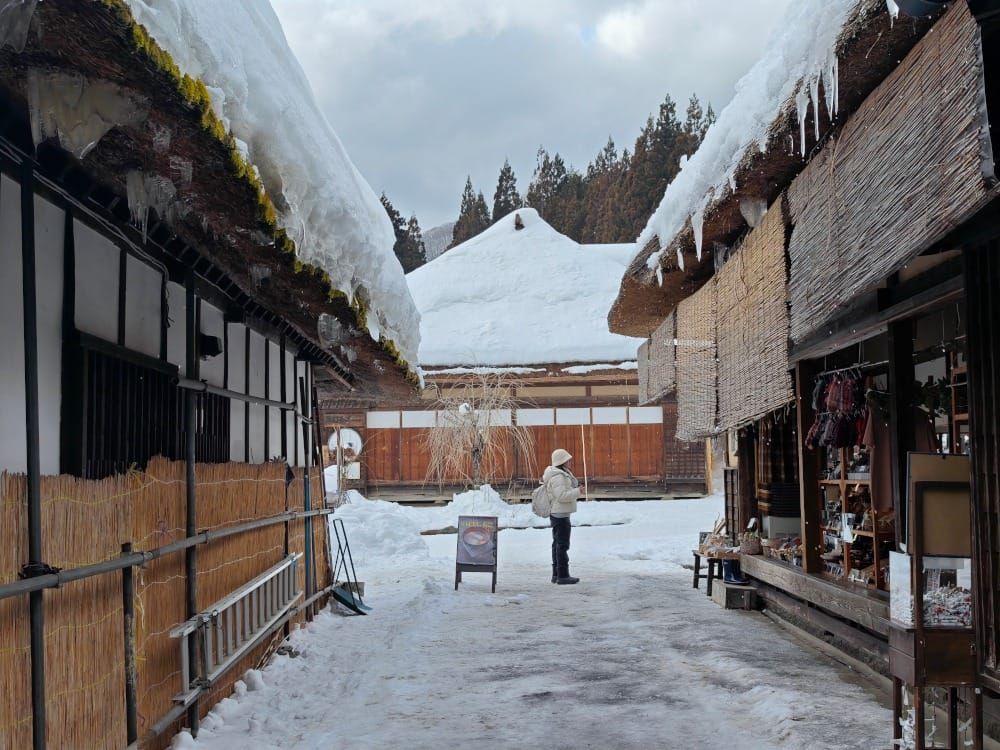
- The main street through the village: you can shoot in both directions — the row of houses looks beautiful
- The viewpoint on the hill along the path up to the shrine: this is the highlight, showing all the thatched roofs lined up in a beautiful pattern, but it was closed when we visited
- The torii gate and the quiet path at the end of the village: fewer people, giving photos a calmer feel
Food You Have to Try: Don't Leave Empty-Handed
The food here makes you think, "Ah… I've really arrived in Aizu."
- Negi soba (green onion soba): the signature dish, eaten using a whole green onion instead of chopsticks (fun and great for photos!)
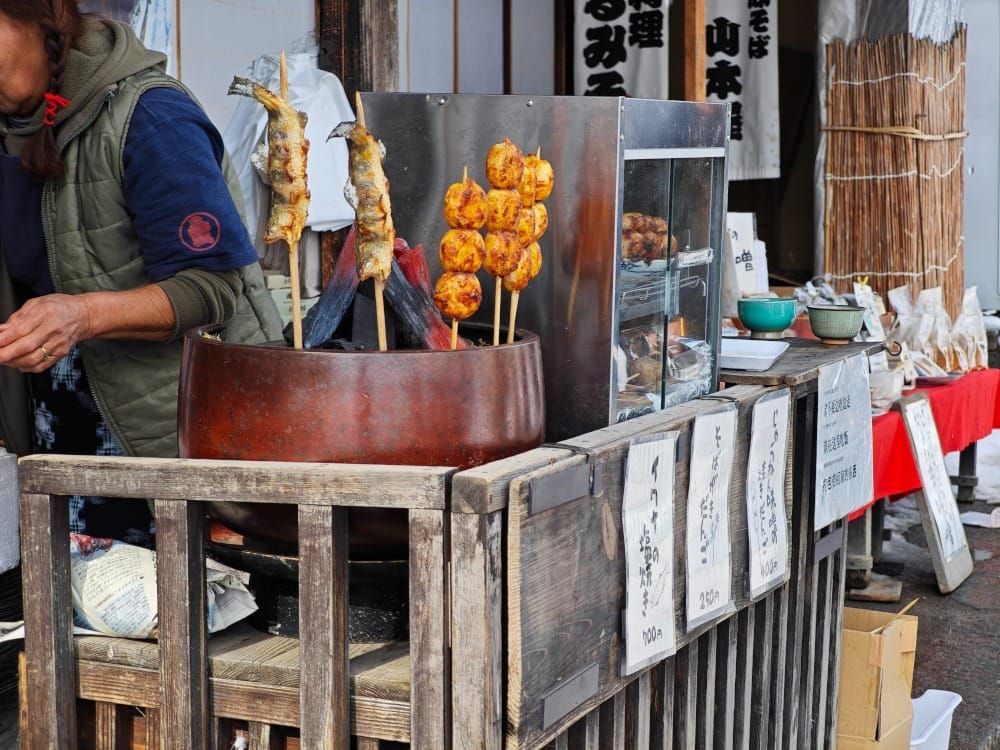
- Snacks/sweets worth trying if you come across them
- Tochimochi (mochi made from tochi nuts, the nuts of the Japanese horse chestnut tree)
- Shingoro (looks similar to dango, coated with a miso-sesame or perilla glaze)
- In winter we recommend ordering something hot first, since your hands will start feeling cold fast
A small note: some shops may be closed on Wednesdays, which narrows your lunch options. If you're visiting on a Wednesday, allow a little extra time to find a place to eat. Shops here also open late and close early — many are open 11:00-16:00.
Fun Facts About Ouchi-juku
An Edo-period "post town"
Ouchi-juku was once a post town on the Aizu-Nishi Kaido trade and transport route, which connected the Aizu area to Nikko during the Edo period. That gives it the feel of a real waypoint for travelers of the past, not just a village put on for tourists.
Officially registered as a preservation district (since 1981)
The village is designated as an Important Preservation District for Groups of Traditional Buildings, which means the whole village takes the preservation of its Edo-period appearance very seriously.
A strikingly open view, because there are no power or phone lines overhead
The wiring is managed so that it doesn't clutter the sky, leaving a clear view from the hill of the thatched roofs lined up neatly — very easy to photograph.
The main street is not paved with asphalt
Walking on it makes the retro feeling even stronger, especially in winter when fluffy snow covers the path — it gives the feeling of walking in a village from an earlier era
The community shares a simple motto: "Don't sell, don't rent, don't destroy"
It's a principle the locals share to preserve the overall look of the village — and it's exactly why the atmosphere here beats that of many other places.
A signature dish you'll remember instantly: "Negi Soba," eaten with a green onion instead of chopsticks
It's a quirk that's famous nationwide and tied directly to this village (some sources say it started at a soba shop here). It's a bit tricky to eat, but fun and great for photos.