


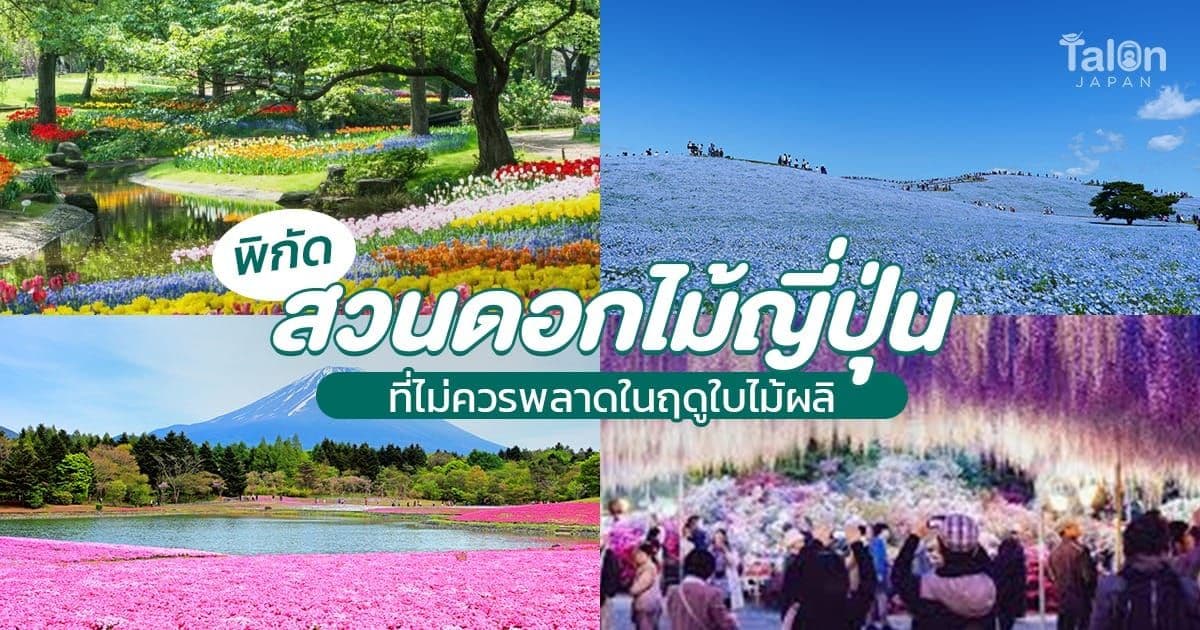


As the cold winds fade, Japan wakes up with some of the most beautiful natural colors of the year. Many people picture cherry blossoms in late March and early April, but spring does not end there. From mid-April through late May is a golden period when many kinds of flowers bloom one after another. Visiting Japan's flower gardens during this time is a stunning experience, with each region offering its own charm.
For travelers looking to escape the crowds and get close to nature, visiting these flower gardens is an experience not to be missed. This article rounds up popular flower spots that look like paintings, sure to delight photographers and nature lovers alike.
Blue Nemophila Fields at Hitachi Seaside Park
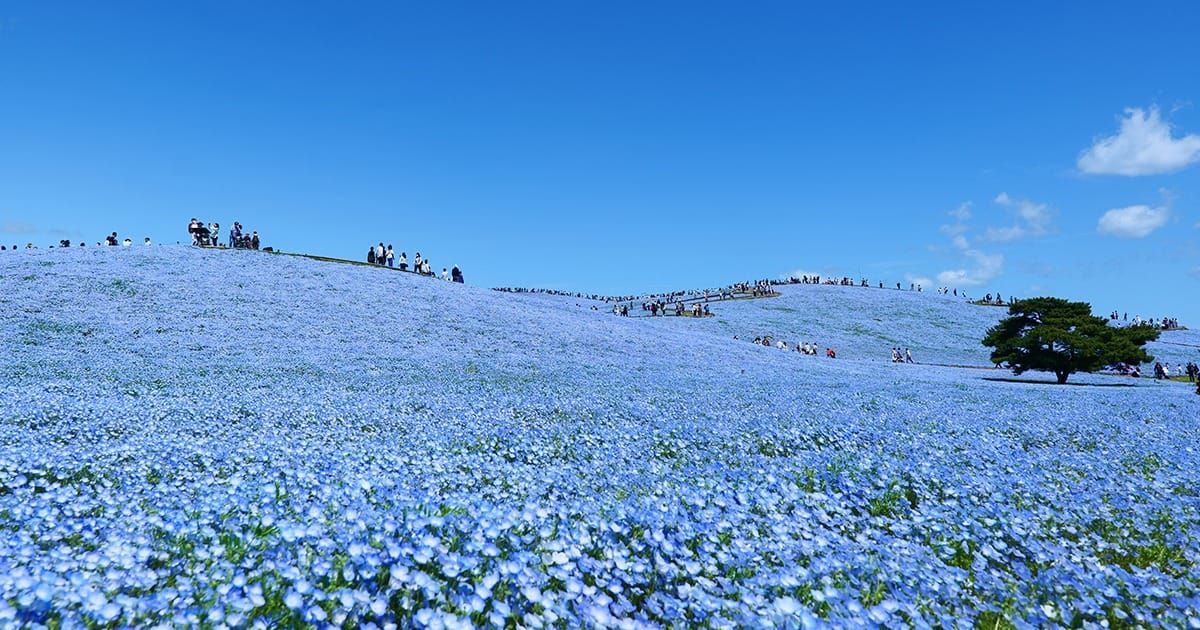
Start in Ibaraki Prefecture, not far from Tokyo. Hitachi Seaside Park is a large seaside park with flowers to see all year round, but the most famous time, drawing visitors from around the world, is mid-April to early May, when the nemophila, also known as baby blue eyes, bloom.
Visit in late April and you'll see Miharashi Hill covered with over 5.3 million nemophila flowers. The whole hillside turns into a vast blue carpet stretching as far as the eye can see. Seen from above, the blue of the flower field blends beautifully with the sky and the Pacific Ocean. Besides the scenery, the park has other fun spots to try, such as cycling along set routes, riding the giant Ferris wheel for a high view, and trying the bright blue nemophila soft-serve ice cream sold only during this season.
The Spectacular Wisteria Tunnel at Ashikaga Flower Park
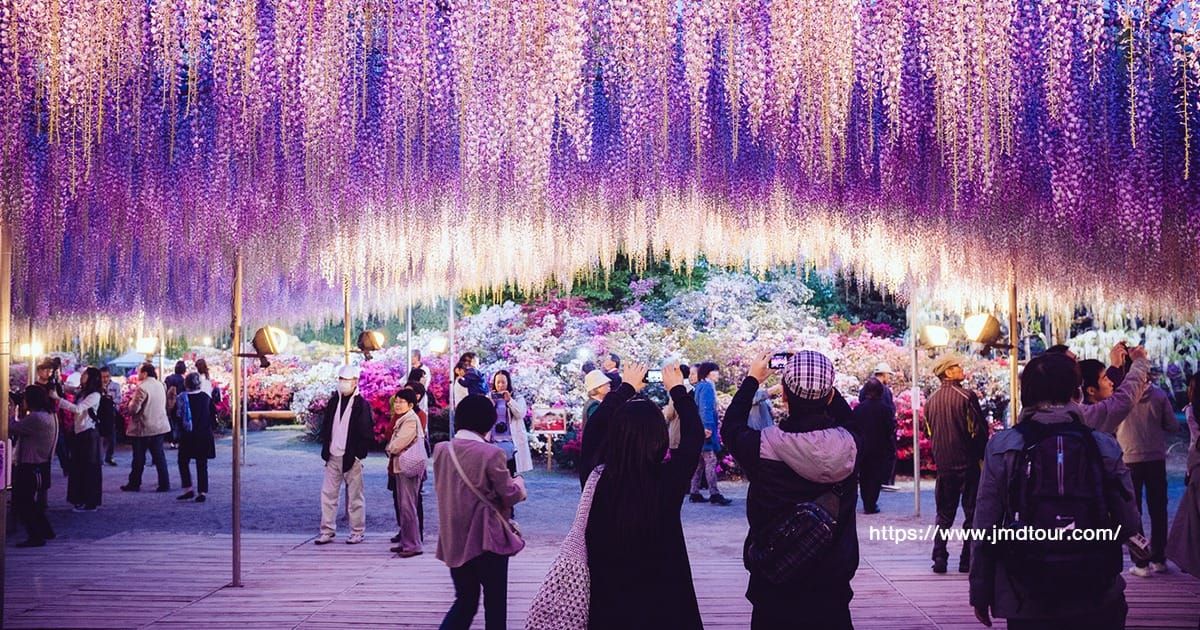
When it comes to spring romance, wisteria, known locally as fuji, is the flower everyone waits for. Ashikaga Flower Park in Tochigi Prefecture is a top destination to see it, with full bloom expected from mid-April to mid-May.
This flower garden is famous worldwide for its wisteria trees over 150 years old, whose branches spread across a huge trellis, forming a canopy of purple flower clusters hanging beautifully overhead. The park is not limited to purple wisteria: the varieties are planted to bloom in sequence, from light pink to purple to white, finishing with a golden-yellow variety. A key highlight that makes this place special is the night illumination: lights shining on the flower clusters reflect on the surface of the pond, creating a mysterious, beautiful atmosphere like stepping into a fairy tale.
A Giant Shibazakura Carpet with Mount Fuji as a Backdrop at the Fuji Shibazakura Festival
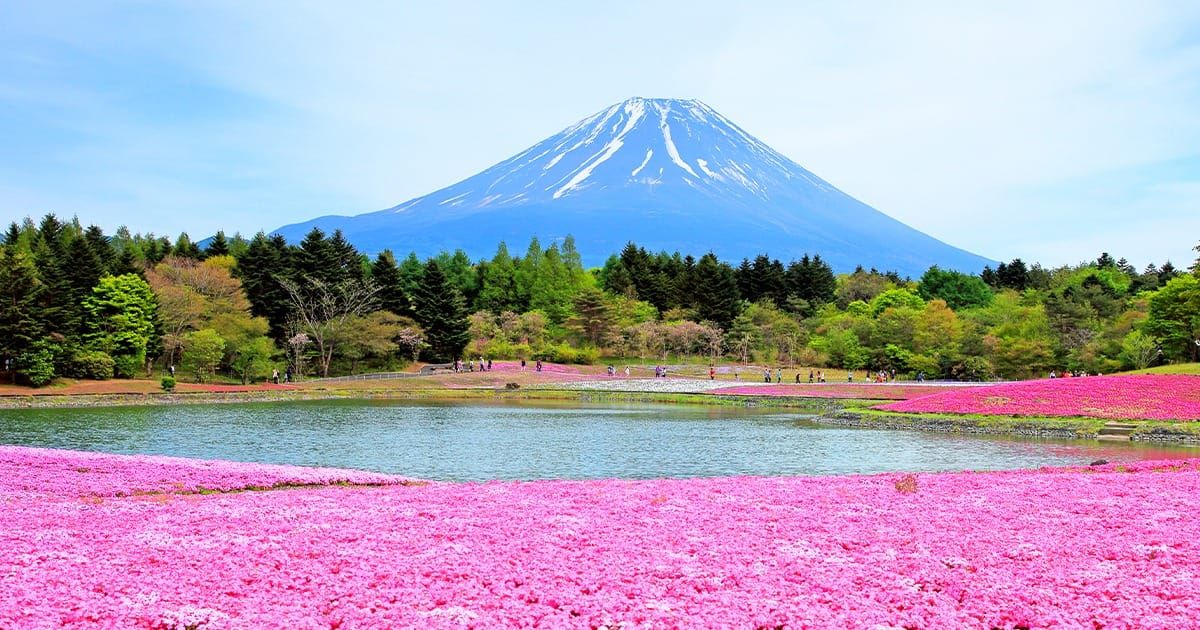
Another highlight of mid-April to late May is the shibazakura, or pink moss, festival. This ground-cover plant has small flowers that look like cherry blossoms but bloom low to the ground, spreading out to look like a giant carpet mixing deep pink, light pink, and white.
Held at Fuji Motosuko Resort near Lake Motosu in Yamanashi Prefecture, this festival is the biggest shibazakura viewing spot. Over 500,000 bright pink flowers stretch out with Mount Fuji, its peak covered in white snow, as a backdrop against the blue sky, a scene you won't find anywhere else. The festival also has stalls selling delicious local food, such as Fujinomiya yakisoba and Koshu chicken giblet stew, letting visitors enjoy beautiful views and great food together.
Colorful Tulip and Poppy Fields at Showa Kinen Park
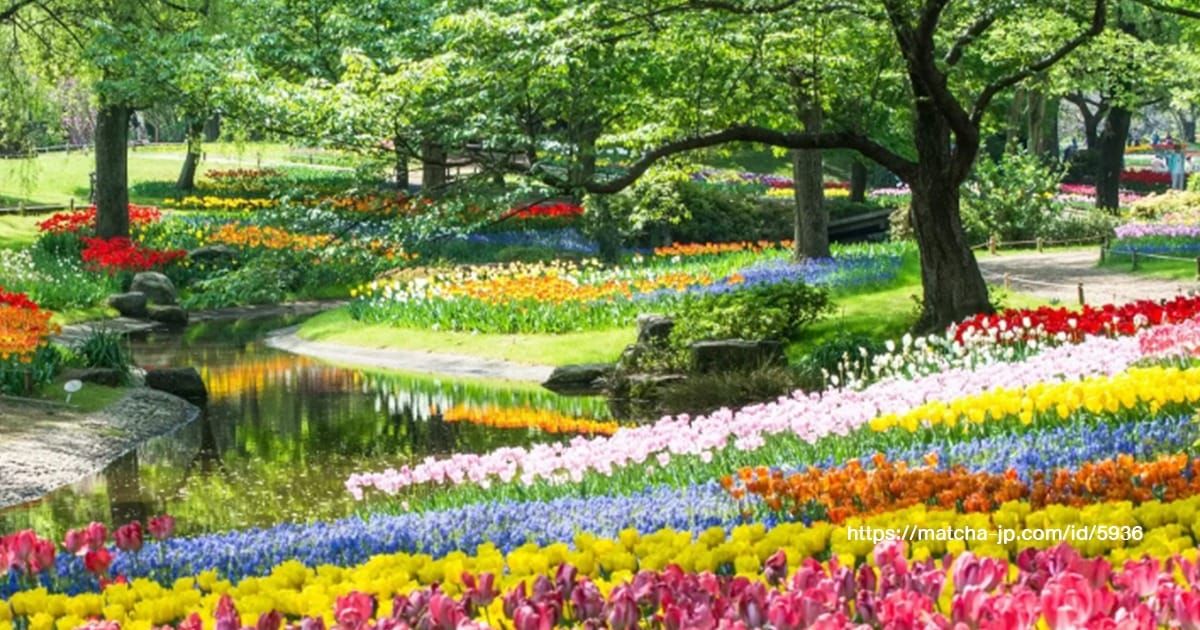
If you don't have time to travel far, Showa Kinen Park in Tachikawa, on the outskirts of Tokyo, is a great and convenient choice. This huge park has space for all kinds of activities. In April, its European-style garden zone transforms into a field of over 200,000 colorful tulips. The flower beds wind along streams and large trees, giving an atmosphere similar to visiting Keukenhof Gardens in the Netherlands.
Once May arrives, the large hillside flower field in the park changes color again with red, pink, and white Shirley poppies blooming in the sun. The flowers swaying in the breeze feel fresh and lively. Visitors can rent bicycles to ride around the park, rent rowboats on the lake, or bring a picnic mat to relax and have lunch on the wide lawn, a perfect way for everyone to unwind.
Kyushu's Wisteria Tunnel at Kawachi Wisteria Garden
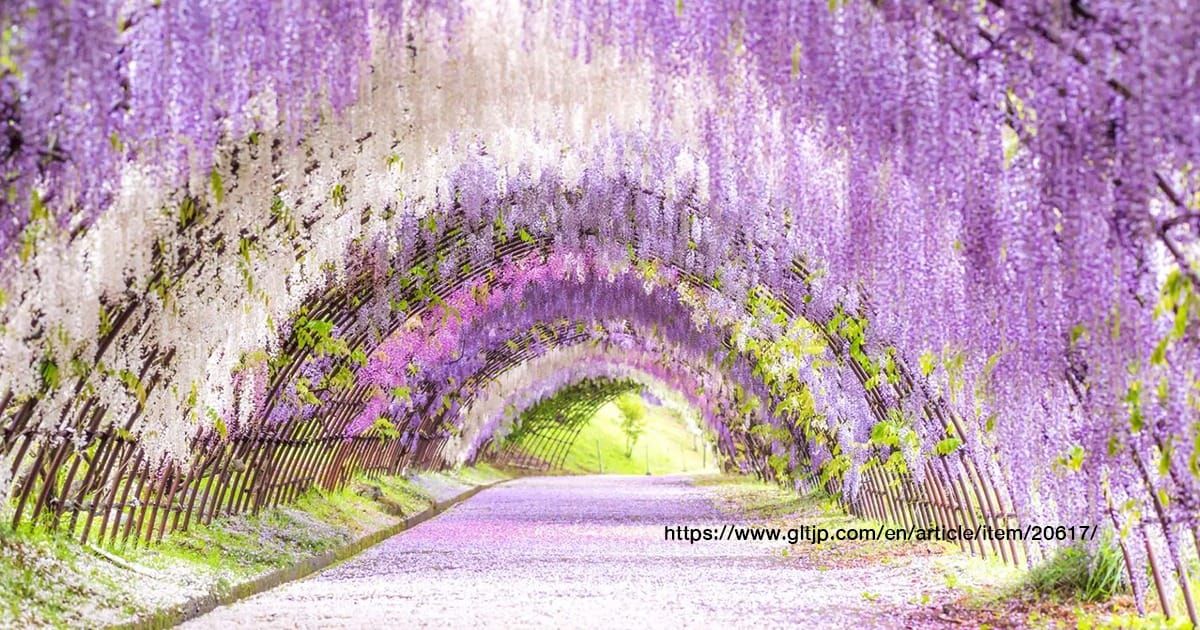
Head over to the Kyushu region for a quieter, more private flower garden. Kawachi Wisteria Garden, in Kitakyushu, Fukuoka Prefecture, is a private garden praised by CNN as one of the most beautiful places in the country. The best time to visit is late April to early May.
This place became famous for its two wisteria tunnels, 80 and 110 meters long. Colorful flower clusters hang down from the arched trellis, creating a captivating scene from every angle, with a light floral scent drifting on the breeze wherever you walk. One thing to watch out for: during the busy season the garden sells tickets only in advance, at a convenience store or online, with none available at the gate. This controls visitor numbers and helps keep the garden looking its best.
Tips for Getting Ready Before You Go
To make your trip to see these natural wonders smooth and memorable, plan and prepare carefully.
- Avoid Golden Week: Late April to early May is Japan's long annual holiday period. Every tourist spot gets crowded, and booking trains and hotels becomes harder and more expensive. If you can adjust your schedule, it's more comfortable to travel just before or after this holiday period.
- Check the weather in advance: Spring weather changes often: some days are bright and sunny, others windy or rainy. Dressing in layers you can add or remove is the best approach. Also, many gardens are open spaces without much shade, so bring a hat, sunglasses, and sunscreen.
- Check bloom status: Each year's temperature and weather directly affect when flowers bloom. Before you decide to travel, check the real-time bloom status on the garden's official website or social media, to make sure you catch the flowers at their fullest bloom.
Conclusion
Planning a trip to these flower gardens in April and May opens up a rewarding and memorable travel experience. Nature creates beauty through a variety of colors, from the blue of nemophila to the purple of wisteria to the pink of shibazakura. Each place has its own charm, waiting for every traveler to discover and capture in photos. Good preparation and research beforehand will help make this trip full of smiles and genuine, simple happiness from nature.