




Summer in Japan is a season full of excitement, especially the famous hanabi festivals, or Japan fireworks festivals, held all across the country. The word "hanabi" (花火) in Japanese means "fireworks," combining "hana" (flower) and "hi" (fire), reflecting the beauty of fireworks blooming across the night sky. Japan's fireworks festivals have a history going back hundreds of years and have grown into a high art form that Japanese people take great pride in.
This article takes you through the most spectacular hanabi events across Japan, with detailed information and tips for planning your visit. Here are the festivals worth planning a summer trip around.
The History of Japan's Fireworks Festivals: A Cultural Heritage of the Japanese Sky
Japan's fireworks festivals (hanabi) trace back to the Edo period (1603–1868), the golden age of Japanese art and culture. Fireworks were originally used to ward off evil spirits and for entertainment, and later developed into large festivals that blend traditional beliefs with modern fireworks technology.
Hanabi in its current form began around 1733, when the shogunate held a fireworks display to remember those who died from famine and epidemics, and to ward off evil spirits. Since then, hanabi festivals have become an essential part of Japan's summer culture.
Today, Japanese fireworks makers have developed special techniques that make hanabi unlike fireworks anywhere else in the world, in shape, color, size, and how they're arranged across the sky, turning them into a high art form that reflects the meticulous spirit of Japanese culture.
Japan Fireworks Festival by the Sumida River: A Tokyo Sky Legend
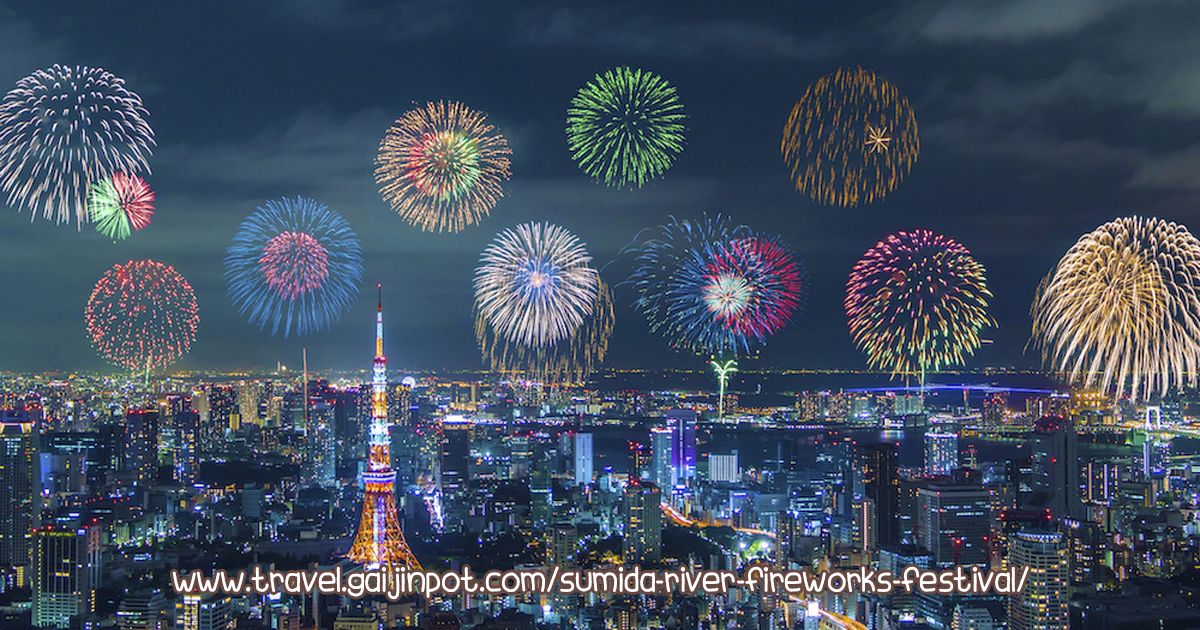
The Sumidagawa Fireworks Festival is the most famous fireworks display in Tokyo, with a history stretching back more than 300 years. It's held on the last weekend of July every year, along the Sumida River.
The Sumida fireworks festival draws more than 1 million visitors a year, with a display of over 20,000 fireworks. The show is split into two parts from opposite banks of the river, creating an exciting competition between the country's top fireworks makers.
What makes this hanabi festival special is the mix of modern Tokyo skyscrapers with traditional culture. Popular viewing spots include Sumida Park, Azuma Bridge, and Tokyo Skytree.
Travel and Key Information
- When: last Saturday of July (7:00–8:30 pm)
- Access: the nearest station is Asakusa Station (Tokyo Metro Ginza Line, Toei Asakusa Line, Tobu Skytree Line)
- Tip: arrive at least 3–4 hours early, since crowds are large
Omagari Fireworks Festival: Akita's Tohoku Highlight
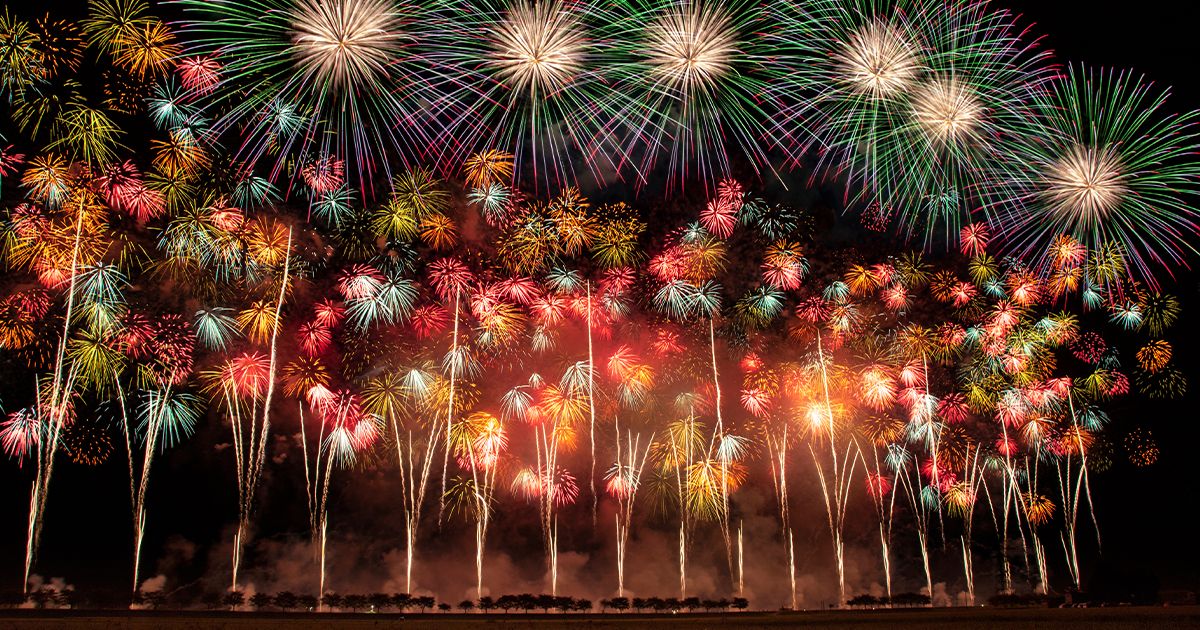
The Akita hanabi, or the Omagari Fireworks Festival, held in Akita Prefecture, is regarded as one of the most prestigious national fireworks competitions. It's held on the fourth Saturday of August every year.
This event brings together top fireworks makers from across Japan, competing with a wide range of techniques. At this festival, you'll see innovation and creativity unmatched anywhere else.
A highlight of the Akita fireworks festival is the daytime show (Hiru-hanabi), fireworks designed to be clearly visible in daylight, along with a huge nighttime "Starmine" display spanning up to 400 meters.
Travel and Key Information
- When: fourth Saturday of August (daytime show 5:30–6:00 pm and nighttime show 6:30–9:30 pm)
- Access: take the train from Akita Station to Omagari Station, then walk about 15 minutes to the venue
- Tip: buy seat tickets in advance for a clear view, and bring a yukata if you want the traditional experience
Miyajima Hanabi: The Charm of the Sacred Island
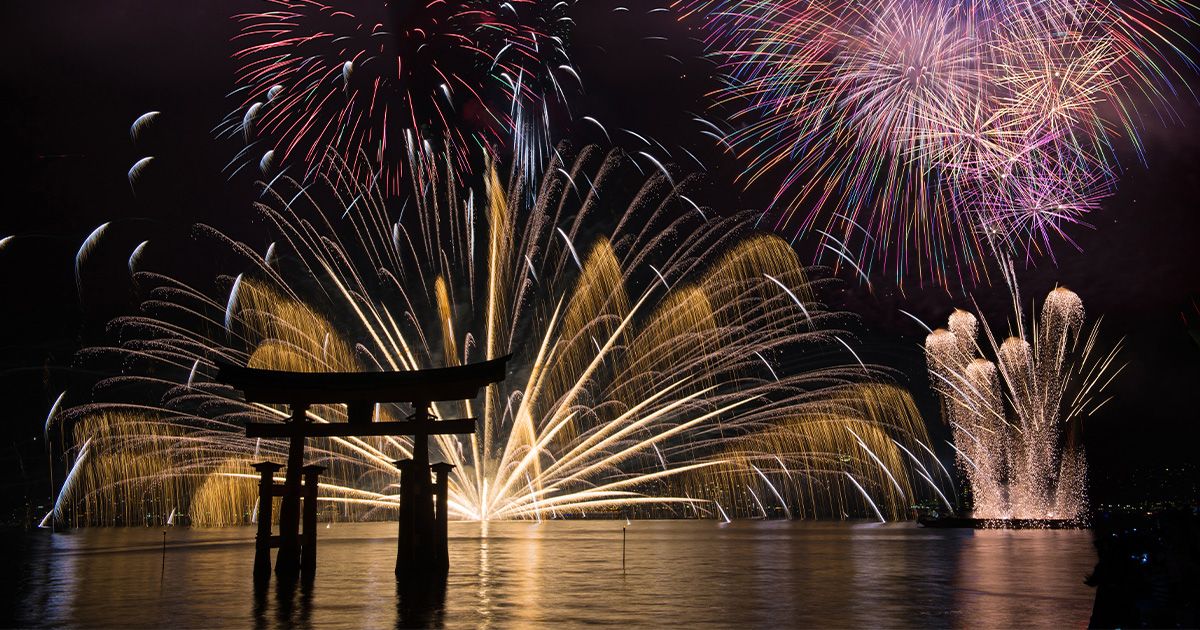
The Miyajima Water Fireworks Festival is held on the sacred island of Miyajima, near Hiroshima. Held in mid-August, it creates a striking scene with fireworks over the sea, backed by the famous red torii gate.
Note: The festival was not held in 2026. The organizer announced this on the official website. Please check the official site for the latest information before you plan your trip.
The Miyajima hanabi stands out for how the fireworks reflect off the sea, so the sky appears to be mirrored on the water. More than 5,000 fireworks are launched from boats in the bay, adding a special touch by using the sea itself as a natural stage.
This hanabi festival is special because it blends natural beauty with world cultural heritage. Visitors typically watch from the island's beach, where the torii gate, Itsukushima Shrine, and the fireworks display can all be seen in one view.
Travel and Key Information
- When: August 14 (7:30–8:30 pm)
- Access: take the train from Hiroshima Station to Miyajimaguchi Station, then take the ferry to Miyajima
- Tip: arrive on the island by early afternoon to find a good viewing spot, and plan to stay overnight on the island or in Hiroshima, since late ferries get very crowded
Kawaguchiko Hanabi: Beauty in the Shadow of Fuji
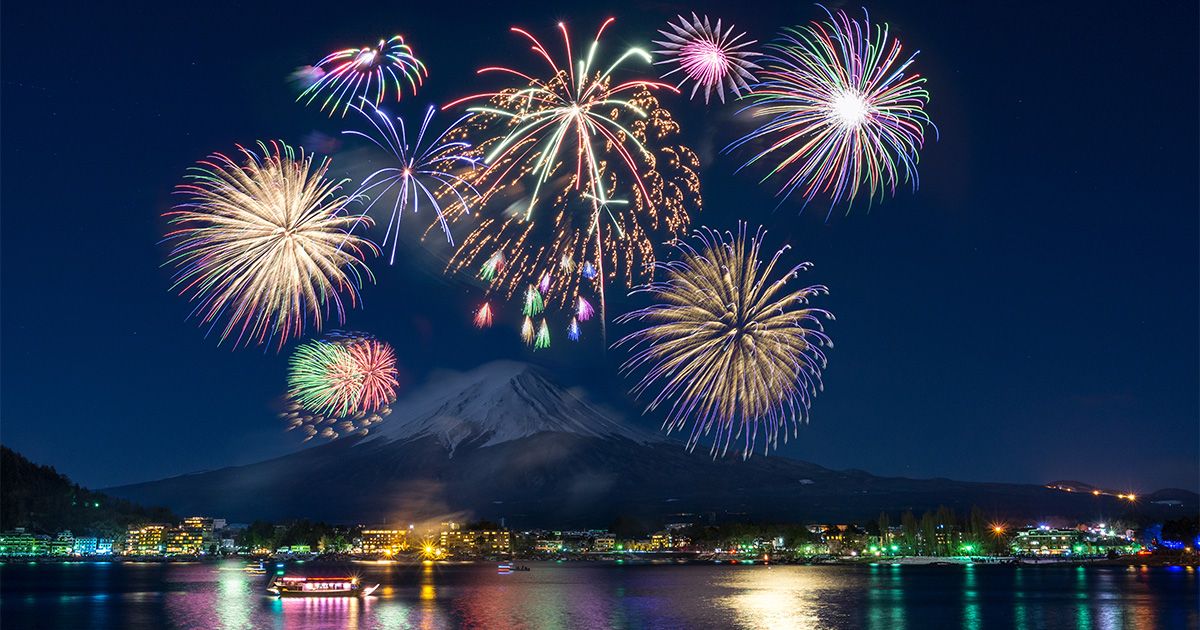
The Lake Kawaguchiko Fireworks Festival creates a striking image with fireworks set against Mount Fuji. It's held beside Lake Kawaguchi, one of the Fuji Five Lakes, in August.
This hanabi is unique for blending a world-class natural landmark, Mount Fuji, with the art of fireworks. On clear nights, visitors see fireworks lighting up the sky over the lake, with the dark silhouette of Mount Fuji as the backdrop.
The Kawaguchiko fireworks festival features around 10,000 fireworks over about an hour, mixing delicate single shells with grand large-scale sequences. There are also food stalls and local activities where visitors can experience the culture of the Fuji region.
Travel and Key Information
- When: first Saturday of August (8:00–9:00 pm)
- Access: take the JR Chuo Line from Shinjuku to Otsuki Station, then the Fujikyuko Line to Kawaguchiko Station, then walk or take a bus to the lakeside
- Tip: book accommodation at least 3 months ahead, since this is peak season for the area, and bring warm clothing as it gets cool by the lake at night
Getting Ready for a Hanabi Festival: Tips for Travelers
Attending a hanabi festival is a memorable experience, but it takes some preparation to enjoy it fully. Here are some useful tips:
- Plan ahead: Popular hanabi festivals often draw hundreds of thousands to millions of visitors, so book tickets and accommodation at least 3 months ahead.
- Dress appropriately: wear a yukata for a traditional feel, or comfortable clothes and shoes you can walk in for a long time, and bring a jacket or shawl since it can get cool at night.
- Pack essentials: bring a mat or sheet to sit on, a water bottle, snacks, a fan, and a cooling towel, especially in the hot, humid summer.
- Arrive early: get to the hanabi venue early to secure a good viewing spot, or consider buying a reserved-seat ticket.
- Use public transport: traffic around festival venues is often very heavy, so it's best to take the train or bus instead of driving.
- Check the weather: Some hanabi festivals may be postponed or canceled in bad weather, so check the latest information before you travel.
- Learn the culture and etiquette: know how to behave at a Japanese festival, such as disposing of trash properly, not reserving too much space, and respecting other visitors' space.
- Take photos courteously: use a small tripod or your smartphone's night mode, and be careful not to disturb other viewers.
What Makes Japanese Hanabi Unique: An Art Form Unlike Fireworks Anywhere Else
Japan's fireworks festivals differ from fireworks displays in other countries in several distinctive ways, which is why they are regarded as some of the most beautiful and artistic fireworks displays in the world.
First, Japanese hanabi has a unique variety of shapes and patterns, such as "kamuro," which spreads out like strands of hair in every direction; "warimono," which bursts into a large sphere with lines spreading across the sky; and "niagiko," which changes color several times within a single burst.
Second, Japanese fireworks production uses ingredients and special methods passed down for hundreds of years, giving hanabi especially vivid colors and precise control over shape. Each firework shell is handmade, and it takes months of work for a display lasting just a few minutes, reflecting the attention to detail at the heart of Japanese culture.
Third, Japanese hanabi festivals arrange their shows with a special structure: they tell a story through the sequence of fireworks, build rhythm and emotion, and gradually raise the excitement toward a climax. This design resembles the storytelling of traditional Japanese performing arts, such as Noh or Kabuki.
Conclusion: A Japan Fireworks Festival Experience You Shouldn't Miss
A Japan fireworks festival is not simply a fireworks display; it's a unique blend of art, culture, technology, and tradition. Attending one of these festivals gives you an experience you'll remember for a lifetime.
Whether it's watching the grand Sumida hanabi in the heart of Tokyo, taking in the beauty of fireworks over the sea at Miyajima, or being amazed by the daytime fireworks in Akita, each festival has its own distinct charm.
Japanese people believe that watching hanabi brings good fortune and prosperity, and helps drive away negative energy. Experiencing a hanabi festival lets you appreciate the beauty of fireworks and also gain a deeper understanding of Japanese culture and spirit.
If you have the chance to travel to Japan in summer, don't miss a hanabi festival. Hanabi is more than a fireworks show — it's a window into the heart of Japanese culture that opens a new perspective for everyone who experiences it.