


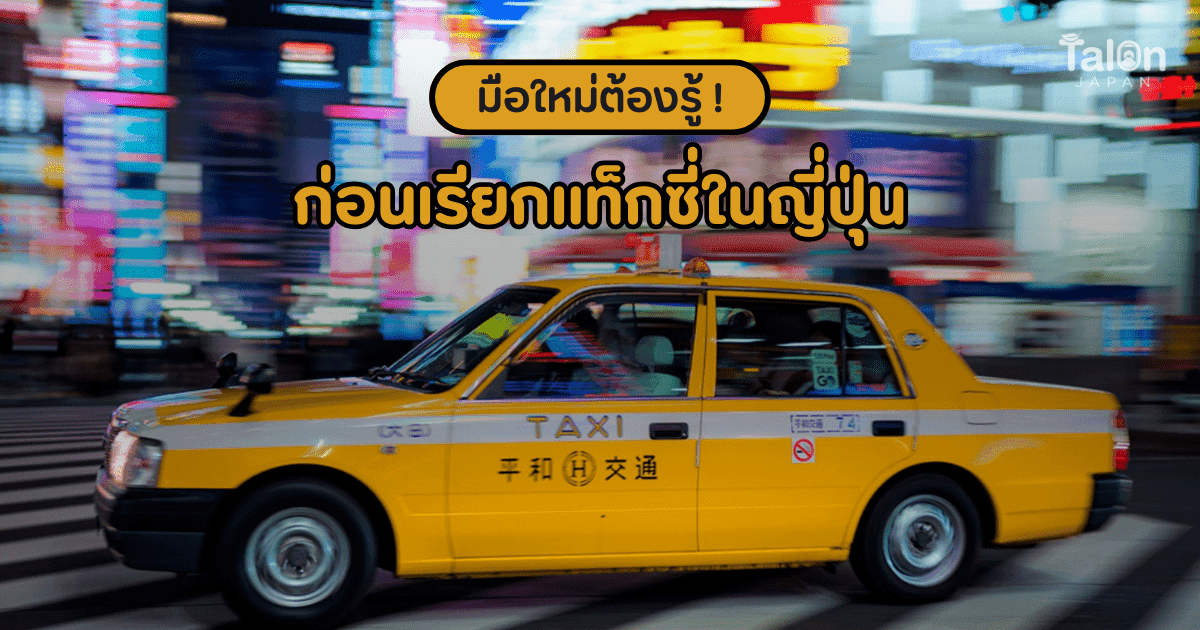


Japan is known for its extensive, punctual train network. But in some situations, such as dragging a large suitcase through a crowd during rush hour, or getting back to your accommodation after the last train has gone, taking a taxi in Japan can offer the most privacy and comfort. Taxis have a reputation for being expensive, but if you understand the system and know how to use it properly, riding one can be better value than you'd expect, especially when traveling in a group or with a lot of luggage.
Japan's transport system has its own unique culture, with customs that differ from those of many other countries. Preparing yourself and understanding the basic rules before hailing a taxi will save time, help you avoid awkward situations, and let you plan your travel budget accurately. This article covers everything you need to know, from reading the light on the taxi to payment etiquette, so your trip goes as smoothly as possible.
Automatic Doors: A Thoughtful Custom Travelers Should Know About
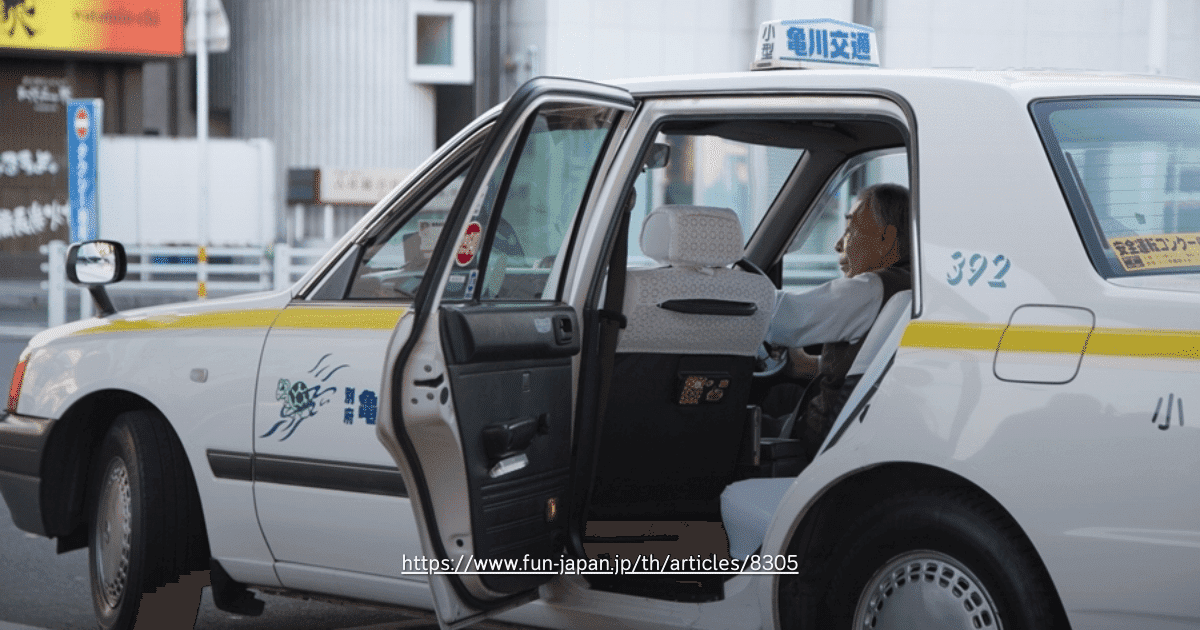
The first surprise, and the most common mistake tourists make, involves the doors. Almost every taxi in Japan, especially in big cities, has an automatic rear left door (the side next to the curb). The driver controls this mechanism with a lever or button at the front of the car.
When the car comes to a full stop, the door opens by itself to invite passengers in, and once everyone is seated, it closes automatically too. So the key thing to remember is: never try to pull the door open or force it shut yourself. Doing so can damage the door mechanism or injure your fingers. Passengers simply need to wait calmly once the car has stopped and let the mechanism do its job. This design reflects omotenashi, the spirit of Japanese hospitality that spares passengers the effort of opening the door themselves, especially when their hands are full.
Taxi Light Signals in Japan
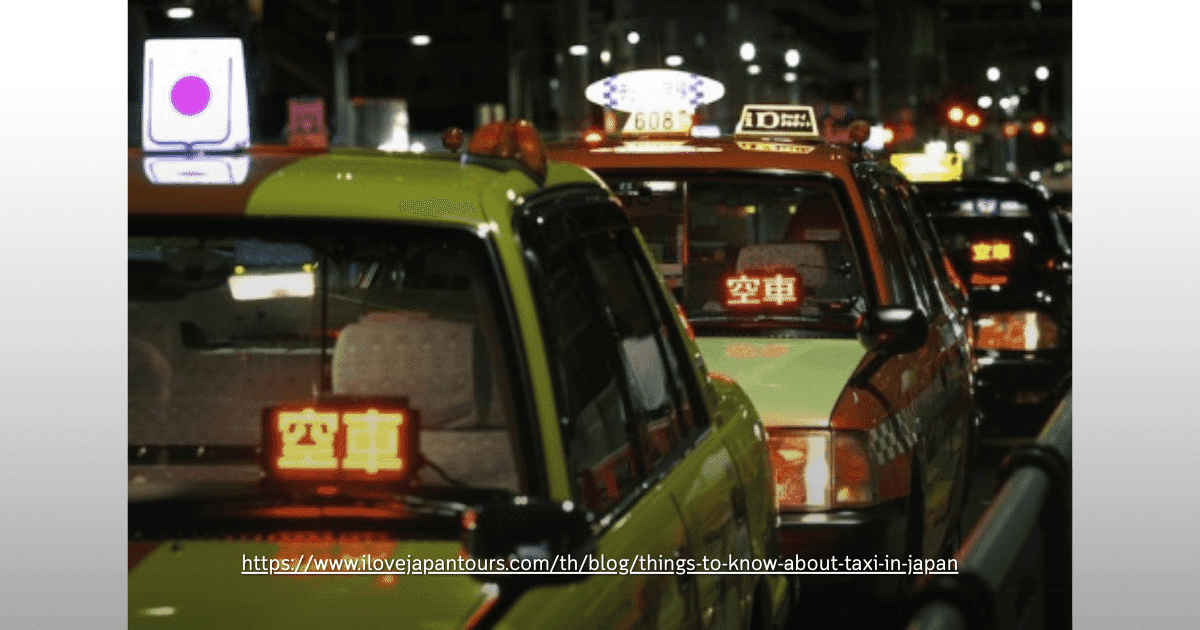
The next source of confusion is reading the light on the roof or front of the car to tell whether it is available. In most countries, green usually means available and red means occupied. In Japan it is exactly the opposite, so it is worth remembering.
- A red light (空車 - kuusha) means the taxi is available. If you see red kanji lit up on the front of the car, that is your cue to hail it. Red is used here because it is the easiest color to see at night and from a distance, so passengers can tell a taxi is free.
- A green light (賃走 - chinsou) means the taxi is occupied. If you see green, the meter is running and someone is already inside. Sometimes the display may show a reserved or payment status too, which also tends to use orange or green. So the simple rule to remember is: red means go, green means no.
How to Hail a Taxi and Where to Find One
There are two main ways to catch a taxi in Japan: hailing one on the street or waiting at a taxi stand. To hail one, stand somewhere safe at the curb and simply raise your hand. There is no need to wave it wildly; simply holding your hand up is enough. A driver who sees you will signal and pull over right away.
That said, in busy areas like Shinjuku Station or in front of large hotels, hailing a taxi on the street can be difficult or against traffic rules. It is better to look for a taxi stand, usually marked with a clear taxi sign and an orderly queue. Boarding at a taxi stand is much faster and more convenient, since cars keep arriving one after another.
Ride-Hailing Apps: A Key Tool for Foreign Visitors
In the digital age, communicating with a driver who is not comfortable with English can be a challenge. Using a ride-hailing app is often the best solution, since you can set your pickup and drop-off points and see an estimated fare in advance. Here are some of the most popular apps for travelers.
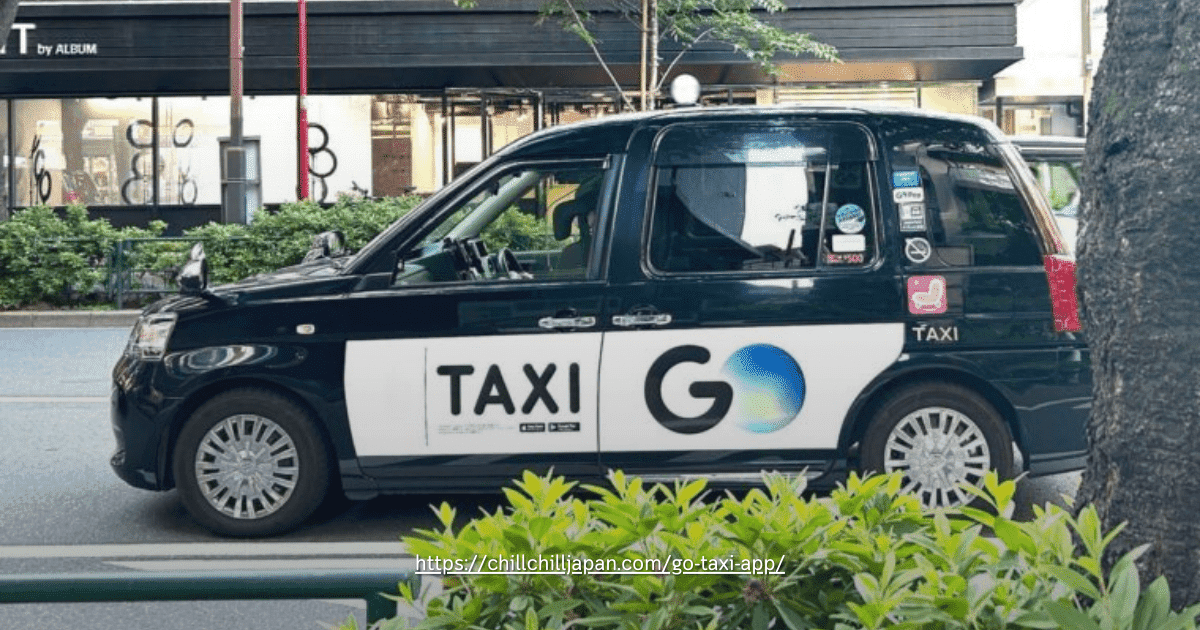
- GO is the app with the largest market share in Japan, formed by a merger of major taxi companies. It is easy to use and covers a wide area, from major cities to smaller towns. Its strength is the large number of taxis in the system, so wait times are short.
- Uber lets travelers who already have an Uber account use it in Japan right away, without signing up again. Keep in mind that Uber in Japan is not a private car service like in some other countries; it dispatches licensed taxis. Its advantages are the familiar credit card payment system and a fully English interface.
- S.RIDE is an app built for speed. Just swipe the on-screen button and it instantly calls the nearest available taxi. It is popular in Tokyo, though you may need to set up payment in advance.
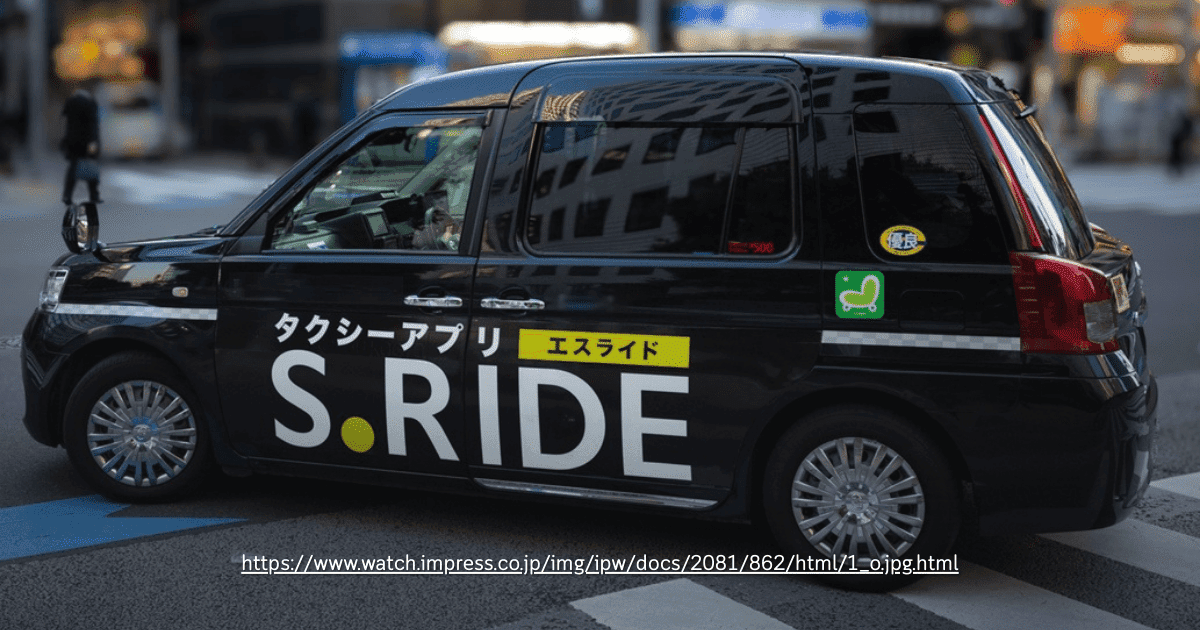
Using an app may add a small pick-up fee on top of the regular meter fare, but in exchange you can be confident you will reach the right destination.
Fare Structure and How the Price Is Calculated
Taxi fares in Japan are calculated strictly and transparently by meter. The price is made up of the following components.
- Base Fare is the fixed amount the meter starts at once you board and it begins running. It varies by city and car size. In Tokyo, for example, the current base fare is 500 yen for the first kilometer, though in some cities it may start at 600 to 700 yen.
- Distance and Time Fare is added after the initial distance: the price rises at set intervals (for example, every 200 meters or so), and it also rises when the car is stuck in traffic or moving slowly. You may notice the meter climbing fairly quickly.
- Late Night Surcharge applies if you ride at night, usually between 10:00 p.m. and 5:00 a.m., when a 20 percent surcharge is added automatically by the meter. This is why a taxi ride home from a late-night party costs more than usual.
- Highway Tolls are the passenger's responsibility if the route uses a highway. The driver will let you know in advance, or add the toll to the fare at the end.
Etiquette and Behavior Inside a Taxi in Japan
Inside a taxi in Japan, the cabin is usually spotless, the driver is dressed neatly and often wears white gloves, and there is a clear partition between the driver and passengers for hygiene. Here is the etiquette passengers should follow.
- Wear Your Seatbelt. Japanese law is strict about safety. All passengers, including those in the back seat, must buckle up as soon as they get in. If you do not, the driver may not start driving until you do, or will remind you to.
- No Smoking or Eating. Most taxis in Japan are smoke-free, and smoking inside is strictly forbidden. You should also avoid eating strong-smelling food or drinking anything that could spill, to keep the car clean for the next passenger.
- Conversation. Most Japanese drivers are polite and respect your privacy. They will not start a conversation unless the passenger does first, and you should not make loud noise that distracts the driver. If you need to communicate your route, the clearest way is to show the driver your phone screen with the address in Japanese, or a Google Maps route.
Payment and Tipping Culture
When you reach your destination, the meter stops and shows the total. Payment is very convenient these days; almost every taxi in Japan accepts cash, credit cards, and IC cards (such as Suica or Pasmo), as well as various QR code payment apps.
- The Payment Tray. If you are paying with cash, do not hand the money directly to the driver. There is usually a small tray near the center console; place your cash there. The driver will count it and return your change in the same tray. This custom is meant to be polite and avoid physical contact.
- No Tipping Required. This is one less thing to worry about. Japan has no tipping culture; excellent service is simply considered part of the driver's job. Trying to force a tip on a driver may confuse them, and some may even chase after you to return the money, thinking you forgot it. So just take your full change and say thank you; that is enough.
Final Thoughts
Taking a taxi in Japan may not be the first choice for long cross-city trips, given the relatively high price. But for short trips within a city, traveling with heavy luggage, or a group of three to four people, once you split the fare it can be just as good value as the train, with far more comfort and convenience.
Understanding the automatic door system, reading the light signals, and having the right apps ready will help travelers use this premium transport service with confidence, without feeling awkward, and turn any travel worries into genuine appreciation for Japanese service.