


Traffic signs in Japan follow international standards and may look familiar. However, Japanese drivers follow traffic rules very strictly and are courteous on the road. Drivers therefore expect others to do the same, so if you break a rule, other drivers may not expect it, which increases the risk of a collision.
We've put together all 61 signs and symbols you should know before renting a car to drive in Japan, to help prevent accidents that could result from misunderstanding a traffic sign.
| Traffic Signs You Must Obey | |
|---|---|
1. Road Closed |
2. Closed to Passage |
3. No Entry |
4.Closed to All Types of Vehicles |
5. No Trucks |
6. No Trucks Carrying a Load Over the Weight Shown on the Sign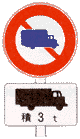 |
7. No Large Passenger Vehicles Such as Buses |
8. No Motorcycles |
9. No Handcarts |
10. No Bicycles |
11. Closed to the Type of Vehicle Shown (in this example, cars and motorcycles) |
12 Drive Only in the Direction Shown For example, an arrow pointing left and straight means you may only turn left or go straight, not turn right or make a U-turn.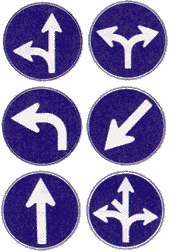 |
13. Do Not Cut in Front of Vehicles Coming from the Main Road such as vehicles pulling out of a building, making a U-turn, or exiting an expressway |
14. No U-turn |
15. No Overtaking |
16. No Overtaking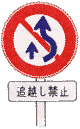 |
17. No Parking or Stopping |
18. No Parking |
19. No Parking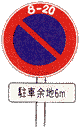 |
20. Parking Allowed Only During the Hours Shown on the Sign (in this example, 08:00-20:00)
|
|
21. No Vehicles Carrying Dangerous Substances, such as gunpowder or other hazardous gases
|
22. Maximum Weight Limit |
23. Maximum Height Limit |
24. Maximum Width Limit |
25 Maximum Speed Limit (in this example, 50 km/h) |
26. Maximum Speed Limit (in this example, 50 km/h)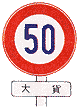 |
27. Minimum Speed |
28. For Cars Only. This sign is located at expressway entrances.
|
|
29. Bicycles Only. No other vehicles or pedestrians allowed.
|
30. Pedestrians and Bicycles Only. No other vehicles allowed.
|
|
31. Pedestrians Only. No vehicles of any kind allowed.
|
32. One Way |
33. Lane for the Vehicle Shown(in this example, trucks) |
34. Lane for Certain Types of Vehicles |
35. Lane for Trucks on the Expressway |
36. Exclusive Lane for Buses Only |
37. Priority Lane for Buses |
38. Designated Lane for Trucks on the Expressway |
39. Mandatory Direction, Showing Which Lane Goes Which Way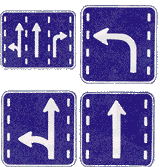 |
40. Vehicles Turning Right Must Go Straight First, Then Turn |
41. No Right Turn |
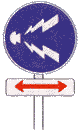
42. Sound Horn to signal other vehicles |
|
43. Sound Horn
|
44. Slow Down |
45. Give Way to the Main Road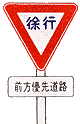 |
46. Stop |
47. Stop and Give Way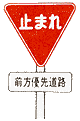 |
48. No Pedestrians |
49. No Pedestrian Crossing |
|


| Informational Signs | |
|---|---|
50. Abreast Riding Permitted |
51. Driving on Tracks Permitted |
52. Parking Permitted |
53. Stopping Permitted |
54. Right of Way |
55. Center Line |
56. Stop Line |
57. Pedestrian Crossing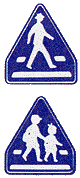 |
58.Bicycle Crossing |
59. Pedestrian and Bicycle Crossing |
60. Safety Zone, Exercise Extra Caution |
61. Advance Warning Sign for the Sign Shown (in this example, No Entry 08:00-20:00, 100 meters ahead)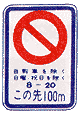 |
Everything You Need to Know Before Renting a Car to Drive in Japan