


Kansai Airport is Japan's third-largest international airport. It is located southeast of Osaka Bay, 5 kilometers from the coastline, and about 60 km from JR Shin-Osaka Station. For arriving passengers, the Kansai Tourist Information Center is located in the arrival hall on the 1st floor of the terminal, open daily from 9:00 AM to 7:00 PM. The airport is as well equipped as any other major airport, with plenty of fast, convenient transport options to the Kansai region's main cities, including Osaka, Kyoto, Nara, and Kobe.
1. Getting from Kansai Airport to Osaka and Kyoto
KIX to Osaka and KIX to Kyoto
▌Traveling by Train to Osaka and Kyoto
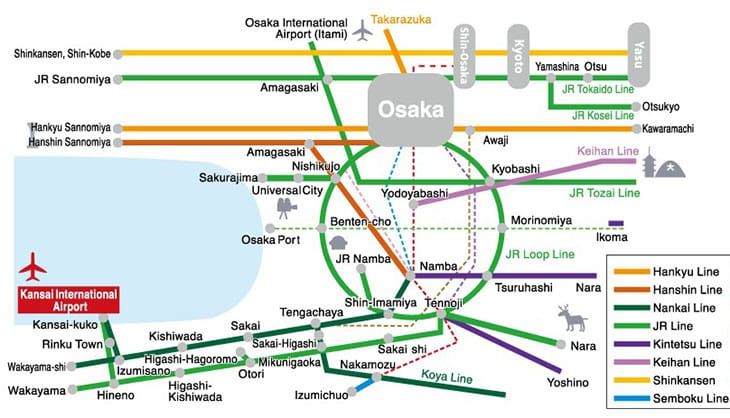
Kansai Airport has two main train operators: JR, the former national railway, and the private railway Nankai. Both are in the same building, next to each other, with clearly separated entrances marked by different colors: blue for JR and orange for Nankai.
JR services run from about 6:00 AM until about 11:00 PM, with two lines available. If you want to activate a Japan Rail Pass, especially from JR WEST, you can exchange it for a physical pass at the JR Information Center in the international arrivals hall on the 1st floor, open daily from 9:30 AM to 7:00 PM, or exchange it and reserve train seats at JR Kansai Airport Station. Those using the Kansai Thru Pass can also start using it from here, though it is valid only on certain trains. If you are not activating your pass at the airport, it is recommended to buy a round-trip ticket, as it is considerably cheaper than a one-way ticket.
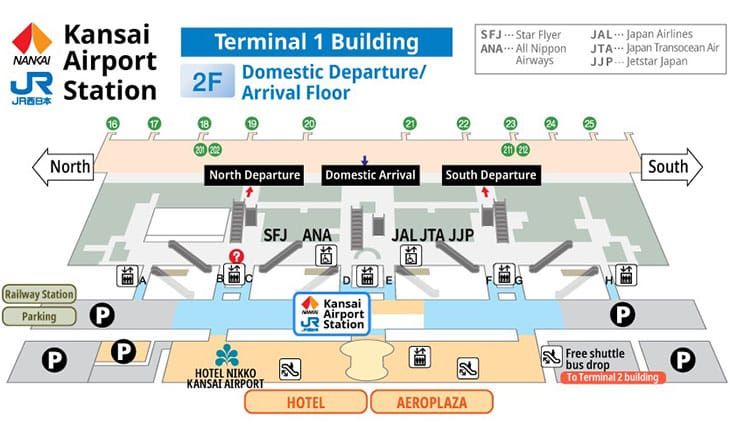
Map of Kansai Airport train station
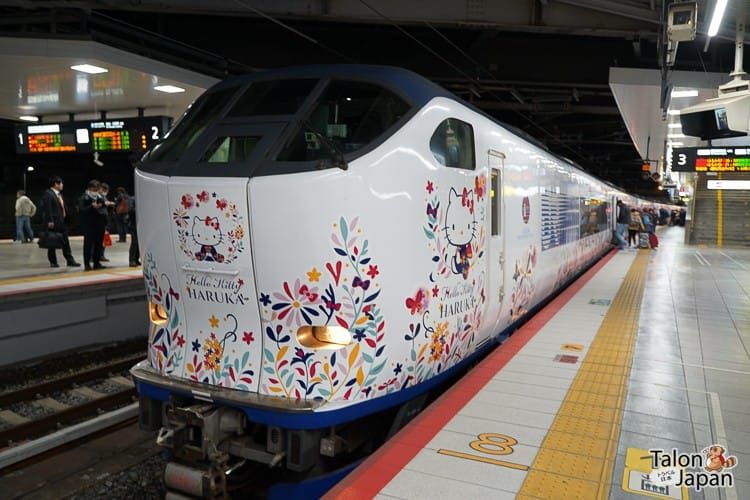
The JR Haruka Hello Kitty Limited Express at Kansai Airport
JR offers two types of trains: the Haruka Limited Express, which is fast, comfortable, and more expensive, and the Kansai Rapid, a regular train that is slower and cheaper.
This is a limited express train with spacious seats and luggage storage. It stops at four stations: Tennoji Station, Osaka Station, Shin-Osaka Station, and the final stop, Kyoto Station. Trains depart from Kansai Airport every 30 minutes.
To Tennoji Station: about 35 minutes, ¥1,840 (non-reserved seat), ¥2,400 (reserved seat)
To Osaka Station: about 45 minutes, ¥2,410 (non-reserved seat), ¥3,000 (reserved seat)
To Shin-Osaka Station: about 50 minutes, ¥2,590 (non-reserved seat), ¥3,100 (reserved seat)
To Kyoto Station: about 75 minutes, ¥2,850 (non-reserved seat) or ¥3,800 (reserved seat)
This is a regular train that stops at many stations along the way, including Tennoji Station and Osaka Station. Trains depart from Kansai Airport every 15-20 minutes.
To Tennoji Station: about 50 minutes from Kansai Airport, ¥1,060
To Osaka Station: about 75 minutes, ¥1,190
Full details on JR trains between the airport and Osaka city
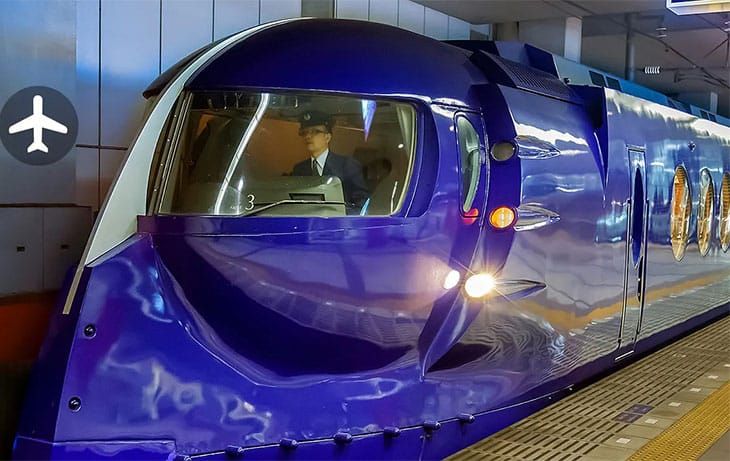
This is a limited express train similar to JR's Haruka, distinguished by its dark blue, helmet-shaped front car. All seats are reserved, and the train has a food and drink counter, restrooms, and luggage space. From Kansai Airport, it runs to Namba Station in Osaka city. It currently comes in two types, Alpha and Beta, with the same fares: regular seats (4 seats per row) at ¥1,490, and Super Seats (3 seats per row) at ¥1,700. There are several departures per hour.
- Rapi α: arrives at Namba Station in 34 minutes
- Rapi β: arrives at Namba Station in 37 minutes
This is an ordinary rapid service, comparable to JR's rapid train. It calls at more stations along the way, so it takes longer, but it is cheaper. From Kansai Airport to Namba Station in Osaka city, it passes through about 10 stations, taking about 45 minutes, with a fare of about ¥950 for adults. Trains run about every 15-20 minutes.
Both Nankai services terminate at Namba Station in central Osaka; neither goes to Kyoto. Travelers heading to Kyoto should use JR trains instead.

If you want comfort and speed, choose a limited express such as JR's Haruka or Nankai's Rapi:t. If you want to save money and don't mind standing for part of the trip and taking a little longer, choose the ordinary trains from either operator.
The next question is which operator to choose. This mainly depends on your destination station. Here are some recommendations:
Choose JR if you plan to use a JR Pass, or if you are heading to Osaka Station (or Umeda Station), Shin-Osaka Station, Tennoji Station, Shin-Imamiya Station, or Kyoto Station
Choose Nankai if you have the Kansai Thru Pass (pay an extra ¥500 reservation fee), or if you are heading to Namba Station or Shin-Imamiya Station
2. Airport Transfer Service
Airport transfer services are becoming increasingly popular: they are good value when you travel as a group, they are convenient, and above all they are safe, with no risk of being overcharged by an opportunistic driver. Airport transfers can be booked in advance online. When choosing an airport transfer, it is best to select a reputable provider, such as Traveloka's airport transfer service, which curates only trustworthy companies with reasonable prices and a range of vehicle sizes to suit every trip. If you are interested, you can check prices or book an airport transfer at https://www.traveloka.com/th-th/airport-transfer
3. Bus
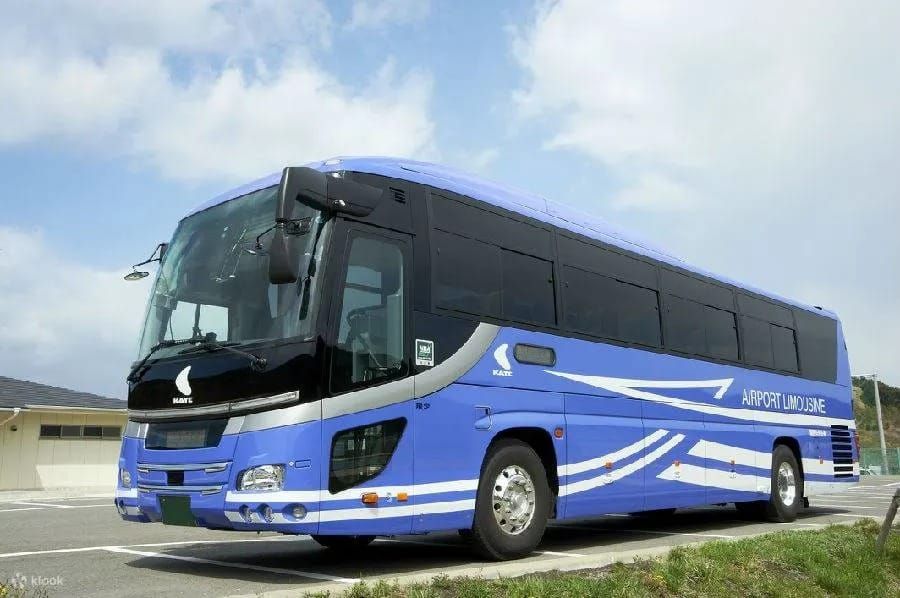
This option suits travelers with a lot of luggage, those who don't want to walk far, or those staying at a hotel along the bus route. Taking the train still involves dragging luggage around and possibly climbing stairs, which can be inconvenient with a lot of bags. Taking a bus that stops at your hotel is much more convenient, but it also takes longer, especially in traffic, so the timing is less predictable than by train. Buses run about twice per hour.
To Osaka Station or Osaka city: about 60-80 minutes, ¥1,800
To Kyoto Station or Kyoto city: about 105 minutes, ¥2,800
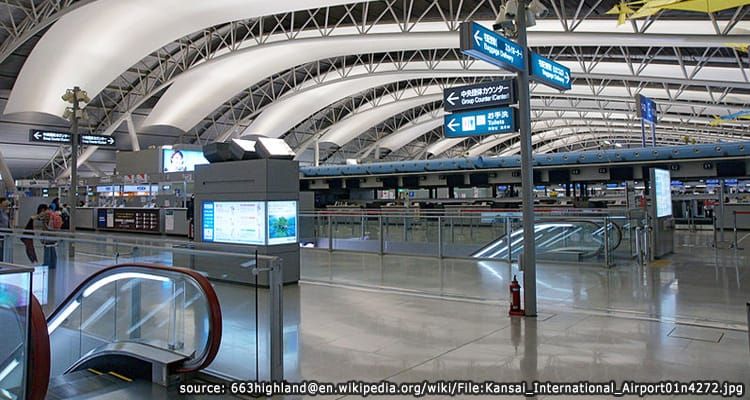
Inside Kansai Airport
4. Taxi
This is another popular option because it is quite convenient, taking you straight to your hotel door with almost no need to walk or carry luggage around. If you are traveling with 3-4 people, the cost per person is not much higher than other options, making it ideal for those who want maximum convenience. Split between four people, the cost works out at roughly one to two times the limited express train fare, depending on traffic.
Fare to Kyoto city: about ¥25,000-30,000
Fare to Osaka city: about ¥15,000-20,000
Late-night taxis (10 PM to 5 AM) charge an extra 20%.
5. Ferry to Kobe Port
Besides all the land transport options above, there is also a high-speed ferry to Kobe Port. The journey takes only 30 minutes, with a fare of about ¥2,000.
For Those Arriving at Kansai Airport Late at Night
If your flight arrives late at night, such as around midnight or later, you have two main options: wait for a bus from the airport to the city, which runs all night at about one bus per hour, or stay at the airport until morning before heading out. The airport also offers simple, affordable rest facilities, including free shower facilities.