


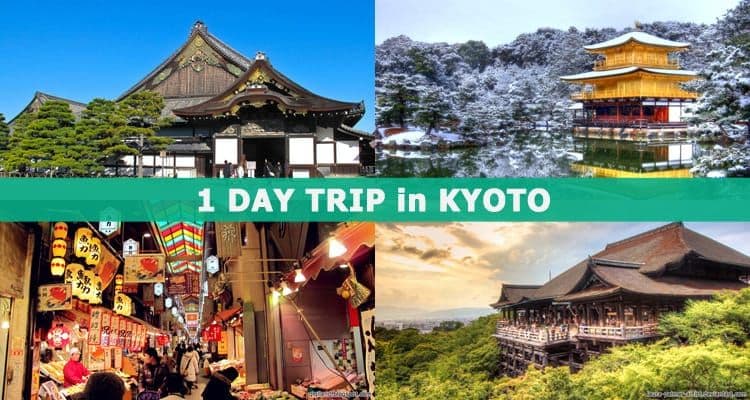


A one-day Kyoto itinerary covering only the most popular spots, for travelers short on time
Nijo Castle - Kinkaku-ji Temple (Golden Pavilion) - Yasaka Shrine - Higashiyama - Kiyomizu-dera Temple - Nishiki Market
| Access to Nijo Castle: Take the Karasuma Subway Line -> transfer to the Tozai Line -> get off at Nijojo-mae Station -> then walk about 15-20 minutes to Nijo Castle |
1. Nijo Castle
Nijo Castle is a UNESCO World Heritage Site. It was built as the Kyoto residence of Tokugawa Ieyasu, the first shogun of the Edo period. Its traditional Japanese architecture is beautiful.
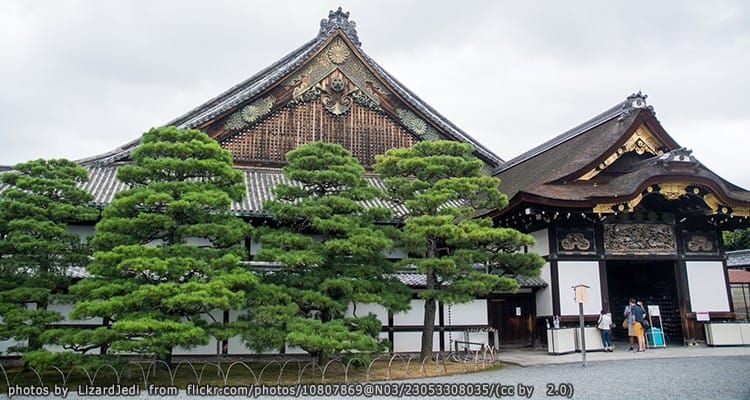
Nijo Castle
| Access to Kinkaku-ji Temple (Golden Pavilion): Take bus route 12 to Kinkaku-ji Mae bus stop |
2. Kinkaku-ji Temple (Golden Pavilion)
It is commonly known as the "Golden Pavilion" because the temple is almost entirely covered in gold. Its beautiful architecture stands out against the pond in front of it. The best view is near the entrance, where the pavilion and garden are reflected in the pond. It's the most popular photo spot.
Kinkaku-ji Temple | clementsgeoff.com
| Access to Yasaka Shrine: Take bus route 59 |
3. Yasaka Shrine
Yasaka Shrine, also known as Gion Shrine, is another famous shrine in Kyoto. It was built about 1,350 years ago and is located in the Gion and Higashiyama districts. Inside, hundreds of lanterns hang from the pavilions, and in the evening the lit lanterns look very beautiful. The shrine is well known for hosting the Gion Matsuri festival every July. It is also a popular spot during the cherry blossom season in April.
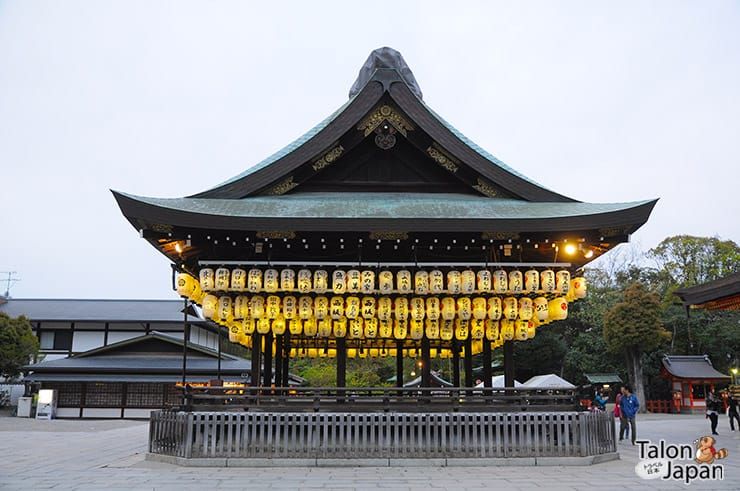
Yasaka Shrine in Gion
| Access to Kiyomizu-dera Temple: Walk through the Higashiyama district |
4. Higashiyama
A shopping and strolling district lined with many shops and sweet stores. This street runs between Yasaka Shrine and Kiyomizu-dera Temple. Its charm lies in the narrow lanes lined with traditional wooden buildings housing restaurants and sweet shops, which keep Kyoto's old-town character alive.
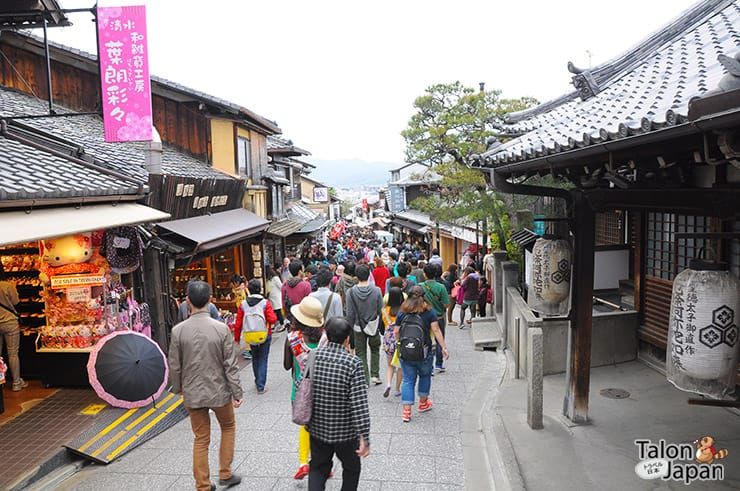
Higashiyama alley atmosphere
5. Kiyomizu-dera Temple
One of the most famous temples in Japan. Its name means "Pure Water Temple," after the water from Otowa Waterfall that flows through the temple grounds. It is also registered by UNESCO as a World Heritage Site.
| Access to Nishiki Market: Take bus route 12 |
6. Nishiki Market
The most famous market in Kyoto, a narrow shopping street about five blocks long with more than 100 shops and restaurants lining it. It is well known as Kyoto's food street, also called "Kyoto's Kitchen." The market is full of everything related to food, such as fresh seafood, cooking utensils, and Japanese knives, and is also famous for its seasonal foods to buy and taste. It also has Kyoto's local specialties, such as sweets found only in Kyoto, pickled vegetables, unusual dried seafood, and traditional Kyoto-style sushi.
Nishiki Market | qiqiland.blogspot.com
Trip Route Map
[nwm_map id=”1″ zoom=”12″]