


![Osaka in One Page! [OSAKA TALON GUIDE] Reviews, Sightseeing, Food, Shopping, Accommodation, Transport](/_next/image?url=https%3A%2F%2Fprod-talon-be.s3.ap-southeast-7.amazonaws.com%2F2018_06_osaka_talon_guide_why2_0505b5cbc6.jpg&w=3840&q=75)


Osaka is likely Japan's second most popular travel destination, rivaling Tokyo in almost every way — food, popular shopping areas, a full range of attractions, easy and convenient transport, and plenty of accommodation options. This page brings together everything you need to plan a trip to Osaka, from start to finish, all in one place. Get ready to explore with this OSAKA TALON GUIDE page.
Why Visit Osaka
When traveling abroad, many people visit several nearby cities in the same region at once, using the largest city as their base. Osaka is the largest and most developed city in the Kansai region.
The Kansai region has been important to Japan since ancient times. It was once home to two former capitals — Kyoto and Nara — spanning over a thousand years combined. As a result, the region is rich in Japanese cultural treasures, including temples, castles, palaces, beautiful gardens, samurai districts, geisha culture, and much more.
Osaka has the second-largest economy in Japan and is the second-smallest prefecture by area. It is also the most important economic hub of the Kansai region, with a population of over 8.8 million people.
In the 16th century, Osaka was chosen as the site for Toyotomi Hideyoshi's castle, ushering in an era of great prosperity and making it a strong candidate to become Japan's capital. However, after Hideyoshi passed away, its influence declined, and the government eventually chose Tokyo as the capital instead.
Osaka may not be as steeped in traditional Japanese arts and culture as popular cities like Kyoto or Tokyo, but its continuous development has given it a unique character all its own. It is also home to the world-famous Universal Studios Japan. Shopping districts are spread across the city, with enough to explore for weeks. It's no surprise that Osaka ranks as Japan's second most popular destination after Tokyo.
When to Visit Osaka: What Each Season Is Like
Osaka's climate is similar to Tokyo's, with clearly distinct seasons. Temperatures tend to run about 1–3 degrees warmer than Tokyo, and rainfall is slightly lower overall. The weather stays generally comfortable year-round except in summer. Rainfall peaks around midyear, which also brings the highest temperatures and longest daylight hours. September carries the highest risk of typhoons, just as it does in Tokyo.
The hottest month in Osaka is August.
The coldest month in Osaka is January.
The rainiest month in Osaka is June.
The month with the longest daylight hours in Osaka is June.
Which season is best really depends on personal preference. If you enjoy cool, comfortable weather with flowers to admire, spring is ideal, with cherry blossoms and more in bloom. For similar weather but with autumn leaves instead, visit in fall. If you love the cold — though snow is rare — winter brings lively illuminations throughout the city. And if you're chasing deals on flights, hotels, and shopping, the off-peak summer season is your best bet.

How Much Does a Trip to Osaka Cost?
The cost of living in Osaka is similar to Tokyo's, so if you've traveled to Tokyo before, you can expect comparable prices for transport, attractions, food, and accommodation.
Here's a rough comparison between a budget trip and a more standard one:
Airfare (round trip)
Shopping
Accommodation (per person, per night)
Food (per day)
Local transport
Sightseeing
Total daily expenses
A 4-day, 3-night Osaka trip on a tight budget costs less, or on amore comfortable budget, costs more.
A 6-day, 5-night Osaka trip on a tight budget costs less, or on amore comfortable budget, costs more.
A 10-day, 9-night Osaka trip on a tight budget costs less, or on amore comfortable budget, costs more.
As you can see, your travel budget really depends on your own style. Choosing the cheapest options and keeping tight control of spending will lower your costs, while flying full-service and staying in nicer accommodation will raise them. Either way, don't plan down to the last cent — always keep some emergency funds and a credit card on hand in case something unexpected comes up. Also, if your trip extends beyond Osaka, expect higher costs, especially for transport and accommodation.
Must-See Attractions in Osaka
Osaka offers a wide variety of attractions — temples, castles, amusement parks, local markets, and shopping areas. Here's a look at some of the best.
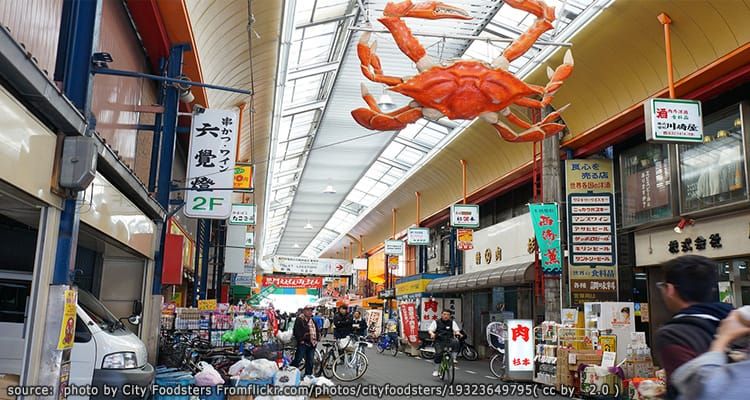
photo by Richard, enjoy my life! From flickr.com/photos/ladyous/28609912050( cc by 2.0 )
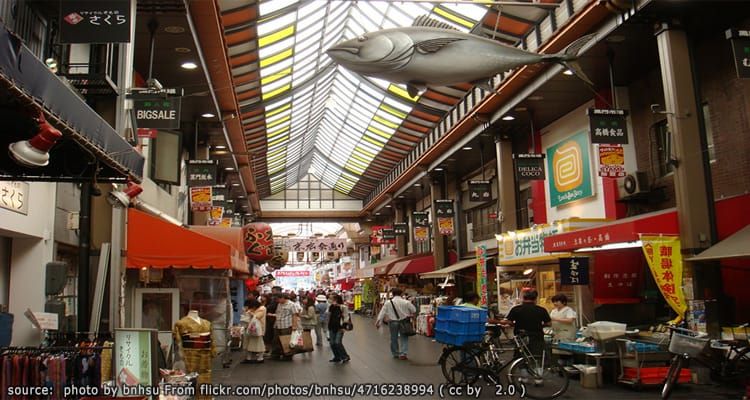
photo by bnhsu From flickr.com/photos/bnhsu/4716238994 ( cc by 2.0 )
Kuromon Ichiba Market is one of Osaka's oldest and most famous markets, earning it the nickname "Osaka's Kitchen." It's a small arcade stretching about 600 meters, lined with over 160 shops selling both fresh ingredients and ready-to-eat food, along with plenty of snacks and local specialties to try.
Access
Right next to Nipponbashi Station on the Sakaisuji Line; use Exit 5 or 10.
Photo by cotaro70s from flickr.com/photos/cotaro70s/24851133792/ [CC by-nd 2.0]
Photo by cotaro70s from flickr.com/photos/cotaro70s/24601508779/ [CC by-nd 2.0]
Access
Within walking distance of Tennoji Station.
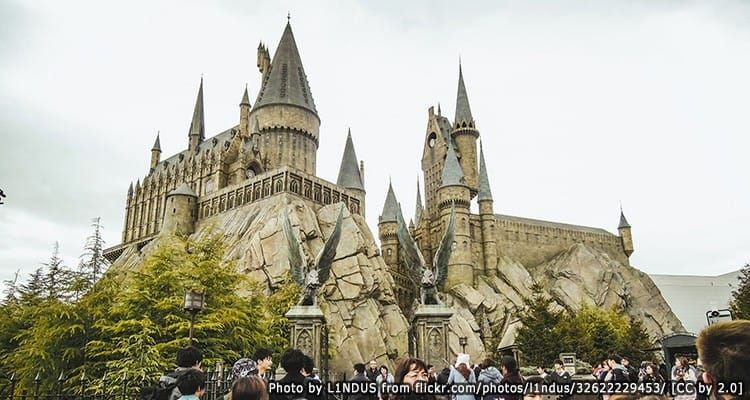
Photo by L1NDUS from flickr.com/photos/l1ndus/32622229453/ [CC by 2.0]
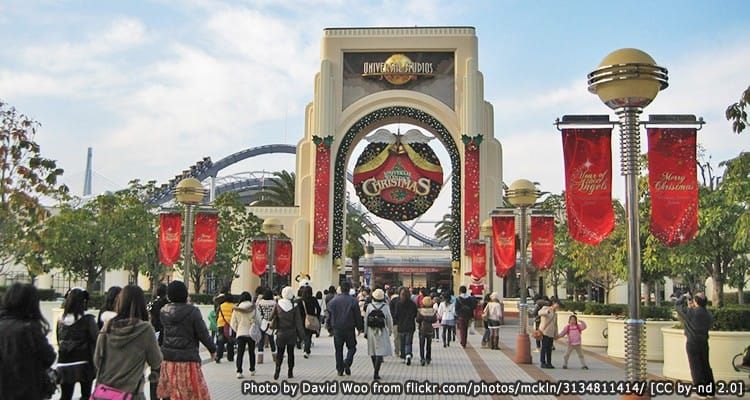
Photo by David Woo from flickr.com/photos/mckln/3134811414/ [CC by-nd 2.0]
Access
Take the JR Yumesaki Line to Universal City Station (about 5 minutes on foot from there).
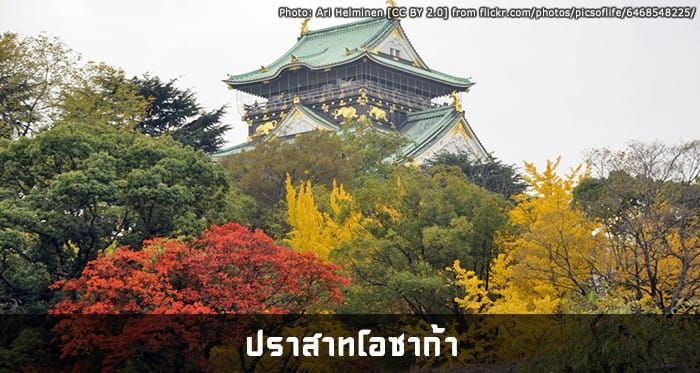
Photo: Ari Helminen [CC BY 2.0] from flickr.com/photos/picsoflife/6468548225/
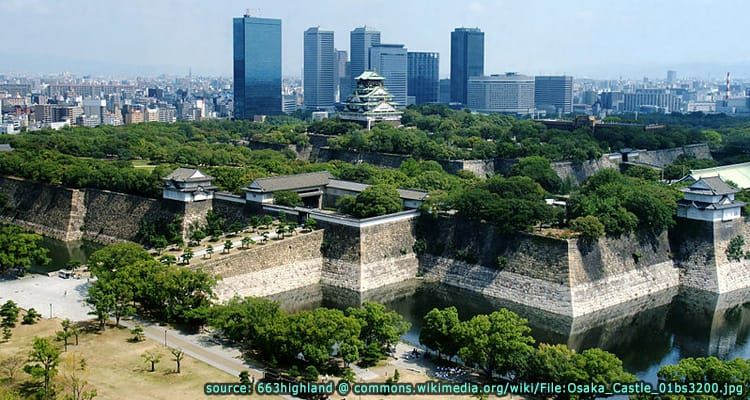
View of Osaka Castle from the upper floor of the museum
Osaka Castle is one of the city's most popular attractions and a symbol of Osaka itself. Built in 1583, it is surrounded by expansive grounds filled with cherry trees, which are especially beautiful in late March during cherry blossom season.
Access
By subway, Osaka Business Park Station; by JR train, Osakajokoen Station.
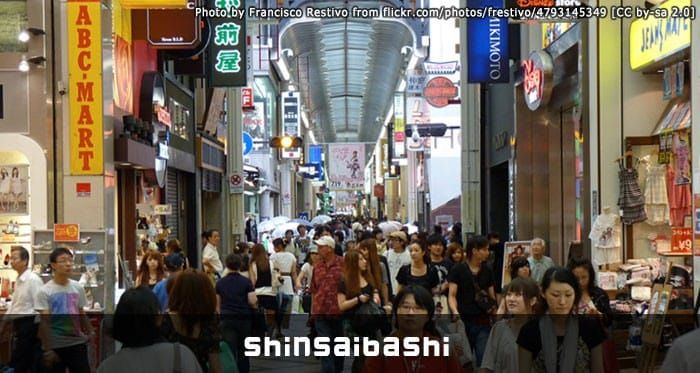
Photo by Francisco Restivo from flickr.com/photos/frestivo/4793145349 [CC by-sa 2.0]
Shinsaibashi is a semi-covered shopping street stretching 600 meters, lined with retail stores, franchise shops, high-end fashion brands, and casual fashion, along with restaurants and dessert shops.
Access
Take the Osaka Metro Midosuji Line or Nagahori Tsurumi-ryokuchi Line to Shinsaibashi Station.
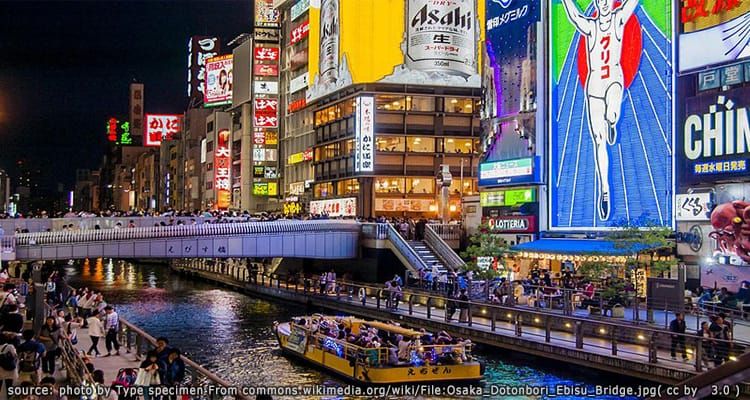
photo by Type specimen From commons.wikimedia.org/wiki/File:Osaka_Dotonbori_Ebisu_Bridge.jpg( cc by 3.0 )
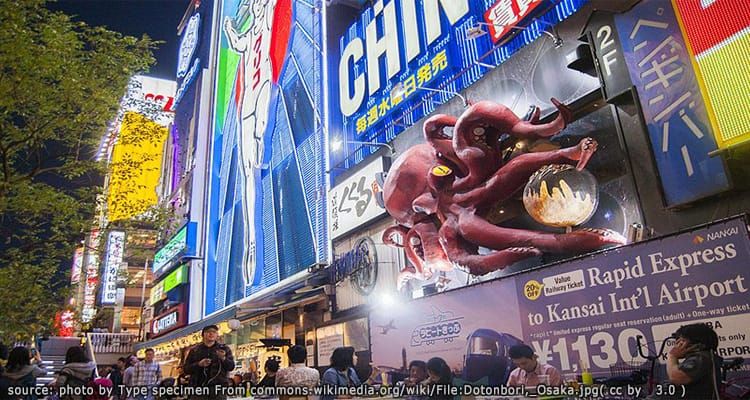
photo by Type specimen From commons.wikimedia.org/wiki/File:Dotonbori,_Osaka.jpg( cc by 3.0 )
Dotonbori brings together restaurants, shops, and nightlife entertainment all in one place — visiting Osaka without stopping here would be a shame. At night, the area comes alive with colorful, bustling storefronts and a huge variety of food. Be sure to take a photo at the famous Glico Running Man sign, one of Osaka's most iconic landmarks.
Access
Take the Osaka Metro Midosuji Line, Sennichimae Line, or Yotsubashi Line to Namba Station (about 10 minutes on foot from there).
Delicious Food You Must Try in Osaka
Osaka is another city in Japan famous for its delicious food. Beyond typical Japanese dishes, it's also the birthplace of several well-known Japanese foods. Let's take a look.
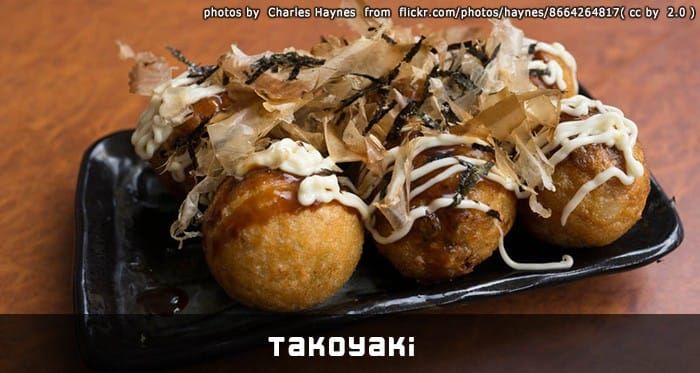
When people think of Osaka, takoyaki is usually the first thing that comes to mind. Takoyaki is made from a wheat-based batter grilled into balls with a piece of octopus inside, then topped with takoyaki sauce, mayonnaise, and bonito flakes. Each ball is about 3–5 centimeters. One famous takoyaki shop in Osaka, Kougaryu, has been around for over 40 years and is located in Amerikamura near Shinsaibashi, a popular shopping district. It has been featured in numerous magazines and TV programs, and it holds a rating of 3.51 on Tabelog, Japan's well-known restaurant review site.
Hours: 10:00–20:30
Access: From Yotsubashi Station, Exit 5 (about 2 minutes on foot), or from Shinsaibashi Station, Exit 7 (about 5 minutes on foot).
photos by Charles Haynes from flickr.com/photos/haynes/8664264817( cc by 2.0 )
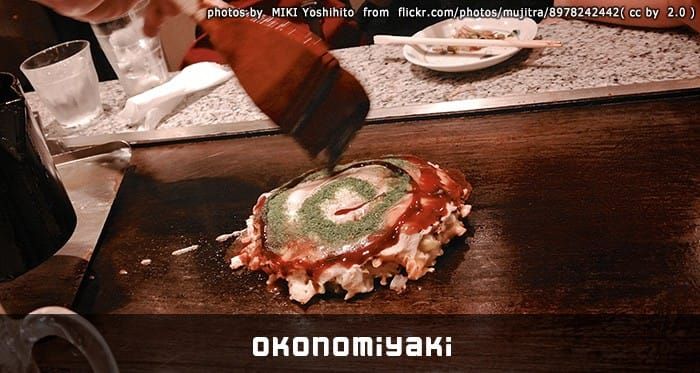
Alongside takoyaki, another must-try is okonomiyaki, often called Japanese pizza. It's made with flour, egg, cabbage, and green onion, mixed together and grilled on a hot plate, topped with your choice of meat, then finished with okonomiyaki sauce, mayonnaise, bonito flakes, and seaweed. Simple ingredients, but the flavor is anything but ordinary. A famous okonomiyaki restaurant in Osaka, Mitsuno, is located near Ebisu Bridge in Dotonbori. It's loved by locals and tourists alike, and the line often stretches outside the shop.
Hours: 11:00–22:00
Access: From Namba Station, Exit 14 (about 5 minutes on foot).
photos by MIKI Yoshihito from flickr.com/photos/mujitra/8978242442( cc by 2.0 )
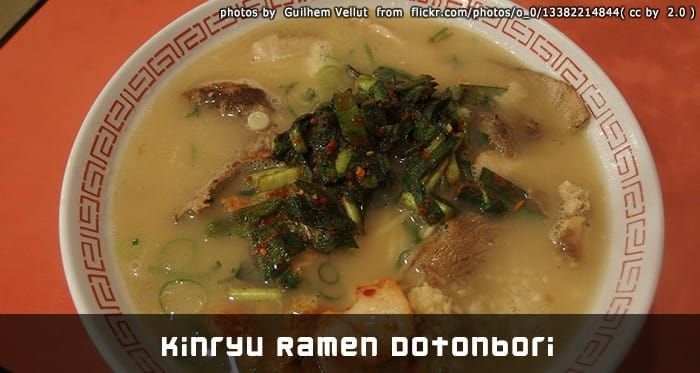
This famous ramen shop serves rich pork-based ramen topped with chashu, plus self-serve rice and kimchi. It's popular with both tourists and locals. The regular bowl costs ¥900, with an extra pork topping option for ¥1,100. Ordering is simple: buy a ticket from the vending machine, hand it to staff, then find a seat and wait to be called — you can help yourself to rice or vegetables while you wait. There are four branches in the Namba area, all open 24 hours.
Access: From Namba Station, Exit 14 (about 5 minutes on foot). The branches are all close to one another, so pick whichever is convenient.
photos by Guilhem Vellut from flickr.com/photos/o_0/13382214844( cc by 2.0 )
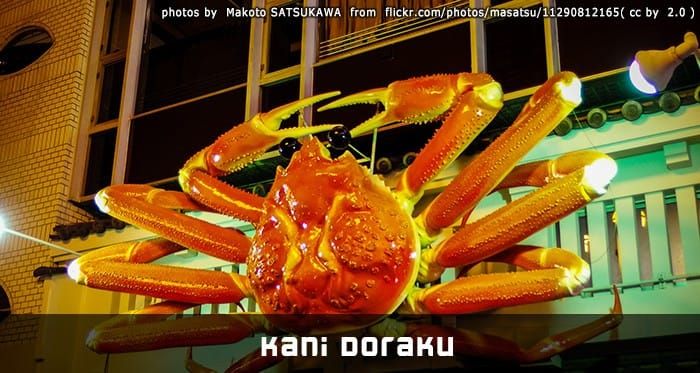
This famous giant crab restaurant sits along the Dotonbori canal, near the iconic Glico sign photo spot and the popular Shinsaibashi shopping street — it's easy to find. Its giant moving crab signboard is another well-known symbol of the area. The menu includes grilled crab, fresh crab, and crab shabu-shabu, each delicious in its own way. Menus are available in multiple languages. Both set meals and à la carte options are available at various price points.
You can check the menu at http://douraku.co.jp.e.at.hp.transer.com/kansai/honten/menu/
*Reservations are recommended in advance, as queues can be long.
Hours: 11:00–23:00
photos by Makoto SATSUKAWA from flickr.com/photos/masatsu/11290812165( cc by 2.0 )
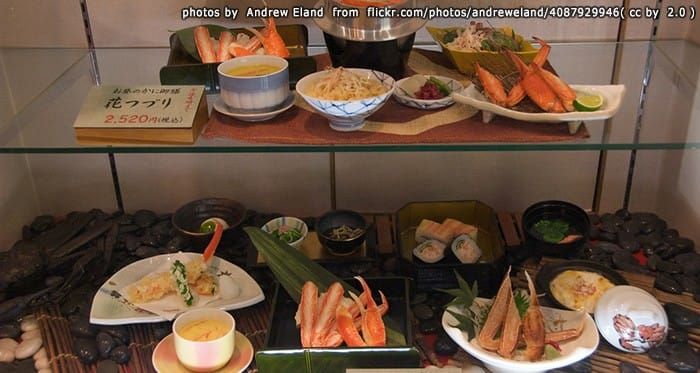
photos by Andrew Eland from flickr.com/photos/andreweland/4087929946( cc by 2.0 )
Pablo is a famous cheese tart brand from Osaka. Its signature is the generous, gooey cheese filling paired with a tart shell that's crisp outside and soft inside. During various seasons, the shop releases limited-edition flavors. Beyond great taste, the tarts look irresistible too. If you're in Osaka, it's worth trying the original shop. It's easy to find — from the crab restaurant, cross the bridge near the Glico sign, and it's on your right.
Hours: 10:00–23:00
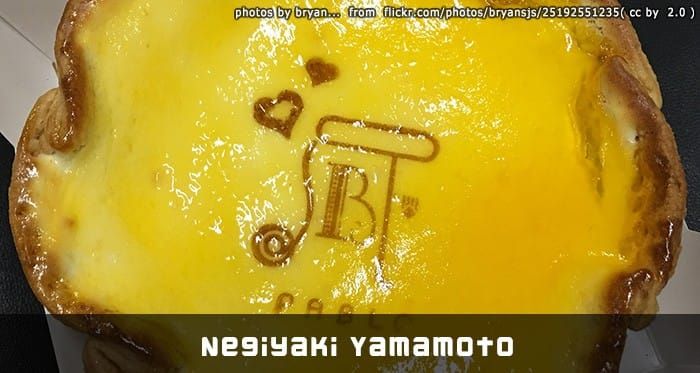
photos by bryan… from flickr.com/photos/bryansjs/25192551235( cc by 2.0 )
What to Buy in Osaka
Osaka offers all kinds of souvenirs that travelers typically look for in Japan. Beyond the usual items, it also has some regional specialties that can be hard to find elsewhere in Japan.
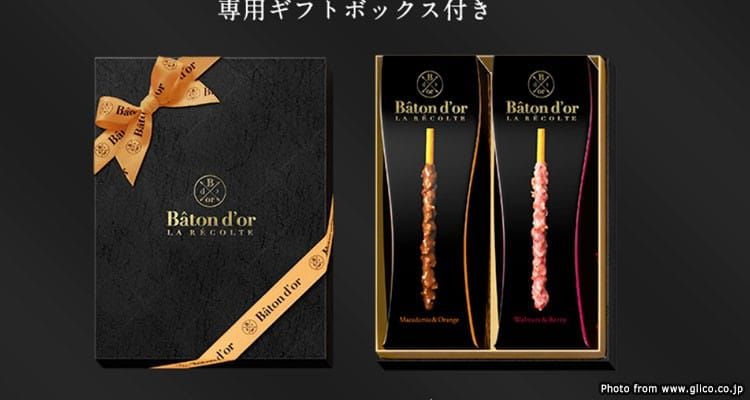
Photo from www.glico.co.jp
Glico Baton D'or is considered the ultimate version of Glico's Pocky. Once you try it, regular Pocky just won't compare. It's sold at only three locations in the Kansai region, with the Osaka branch found at Takashimaya Osaka. It's pricier than regular Pocky, but the quality shows — from the satisfying crunch to noticeably richer ingredients, every flavor feels more intense. Main flavors include milk, café, white chocolate, sugar butter, Uji matcha, and strawberry. There are also limited seasonal flavors, such as a V.S.O.P. Valentine's flavor with rich brandy to balance the sweetness, a sakura flavor sold from March, and a Japanese purple sweet potato flavor available only from October to December.
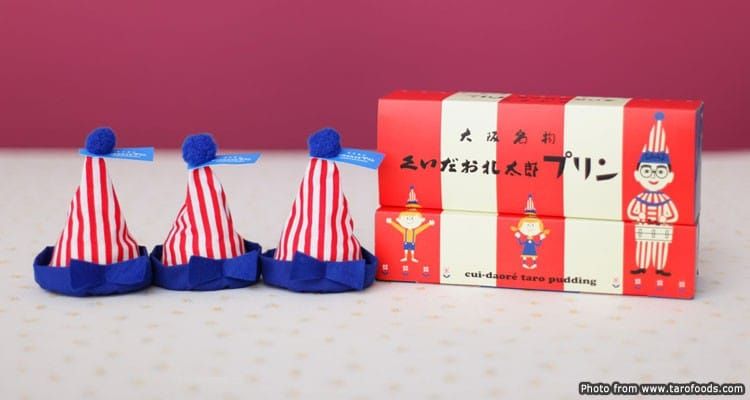
Photo from www.tarofoods.com
This famous Osaka specialty is both delicious and eye-catching, with its packaging featuring a drum-beating mascot character and three pudding cups in a single box. Topped with caramel sauce and crushed caramel bits, it tastes almost like crème brûlée — two flavors in one treat. Thanks to its popularity, this pudding has become one of Osaka's iconic symbols.
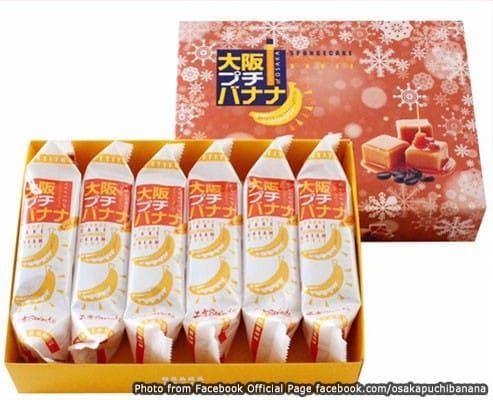
Photo from Facebook Official Page facebook.com/osakapuchibanana
If Tokyo has Tokyo Banana, Osaka has Osaka Petit Banana. Its soft sponge cake pairs with a smooth, sweet custard cream filling infused with banana flavor — the aroma alone is irresistible. The generous filling makes every bite satisfying, and it's a souvenir that's sure to please anyone.
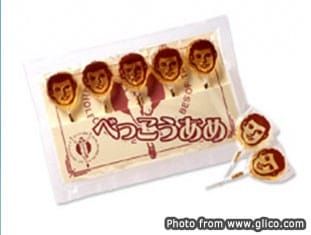
Photo from www.glico.com
If you're looking for an affordable, distinctive souvenir to share with coworkers, the Glico Man lollipop (Bekkoame of Glico Man) is a great choice. As many know, visiting Osaka without a photo of the Glico sign feels incomplete. The flavor is fairly standard, but the eye-catching Glico Man design is what makes this treat a favorite souvenir for so many people.
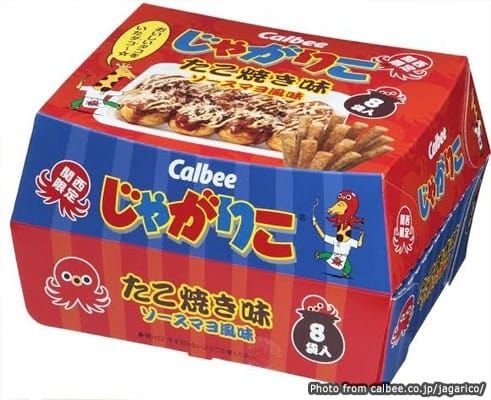
Photo from calbee.co.jp/jagarico/
Calbee's famous crispy potato stick snack Jagariko created a takoyaki flavor sold only in Osaka. Believe it or not, these crunchy potato sticks pair perfectly with takoyaki, one of Osaka's signature foods. Even the box is designed to look like a real takoyaki tray. It's easy to find at supermarkets in Osaka.
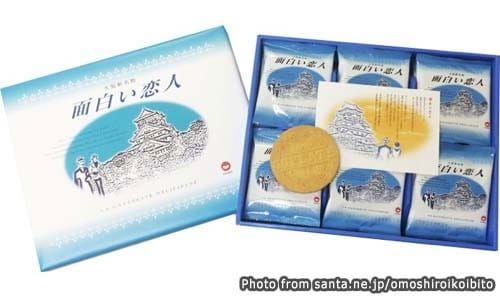
Photo from santa.ne.jp/omoshiroikoibito
This is one of Osaka's famous souvenir sweets, made as a parody of Hokkaido's famous filled cookie "Shiroi Koibito." While the original name means "White Lover," the Osaka version's name means "Funny Lover" - even the packaging design pokes fun at the original, to the point it once led to a legal dispute. It became so famous across Japan that many people wanted to try it, sparking a trend of similar copycat sweets with similar names and packaging in other regions. Many people say the taste is just as good as the original. If you're visiting Osaka, don't forget to try one.
Where to Stay in Osaka
Osaka has a wide range of hotels, just like other major Japanese cities, from budget options to 5-star luxury. Getting around Osaka is easy thanks to the subway, buses, and local trains, and the city is well connected to the rest of Japan by Shinkansen (bullet train) and Kansai Airport. Here are some of the most popular areas to stay:
Shin-Osaka Station ("Shin" means "new," referring to the Shinkansen) is where various Shinkansen lines converge. This makes it a great base for travelers who plan to use the Shinkansen to visit other cities, such as Kyoto (15 minutes), Kobe (15 minutes), Tokyo (2.5 hours), or even Fukuoka on Kyushu. Since the Shinkansen is much faster than regular trains and can be used with the JR Pass, this area suits travelers who prioritize day trips to other cities over exploring Osaka itself, as it's less lively than Osaka's central districts.
Popular hotels near Shin-Osaka Station: New Osaka Hotel, Shin Osaka Station Hotel Annex and Toyoko Inn Shin-Osaka-eki Higashi-guchi
See hotels near Shin-Osaka Station on Agoda.com
Namba is arguably the liveliest area in Osaka, packed with shops, restaurants, large department stores, entertainment venues, and bars. Notable spots include the Shinsaibashi shopping street and the colorful Dotonbori district, one of Osaka's most vibrant areas. Stay here and you can drop off your shopping bags and head right back out to shop more.
Namba has local train lines connecting to various areas both inside and outside Osaka, though it's less convenient for those using the JR Pass. This area suits travelers planning to spend several days in Osaka, since you can stroll around this neighborhood near your hotel every evening.
Popular hotels near Namba and Shinsaibashi: Osaka Hana Hostel, Hotel Chuo Selene and Hotel IL Cuore Namba
7 Recommended Hotels Near Shinsaibashi Station
The area around Osaka Station is a key transit hub connecting to destinations across Osaka, as well as nearby cities like Kyoto, Nara, and Kobe, plus Kansai Airport. The area around JR Osaka Station, also known as Umeda, is considered an upscale central district of Osaka with plenty of shops and restaurants. Hotels here range from budget to luxury. The only thing missing is the Shinkansen, so this area suits travelers who want to explore both Osaka and nearby cities without relying on the JR Pass.
Popular hotels near Osaka Station and Umeda: Hotel Kinki and Hearton Hotel Nishi Umeda
7 Recommended Hotels Near Osaka Station and Umeda
See hotels near Osaka Station on Agoda.com
Maps for Exploring Osaka on Your Own
Osaka Metro Subway and Train Map
| FREE DOWNLOAD: Osaka Subway and Train Map |
Train lines are shown in white-and-gray stripes or solid gray. If you have a JR Pass, you can ride these lines.
The other colored lines represent the Osaka subway, which has several lines. Details for each subway line are shown in the top right corner of the map.
| FREE DOWNLOAD: Map of Osaka Tourist Attractions |
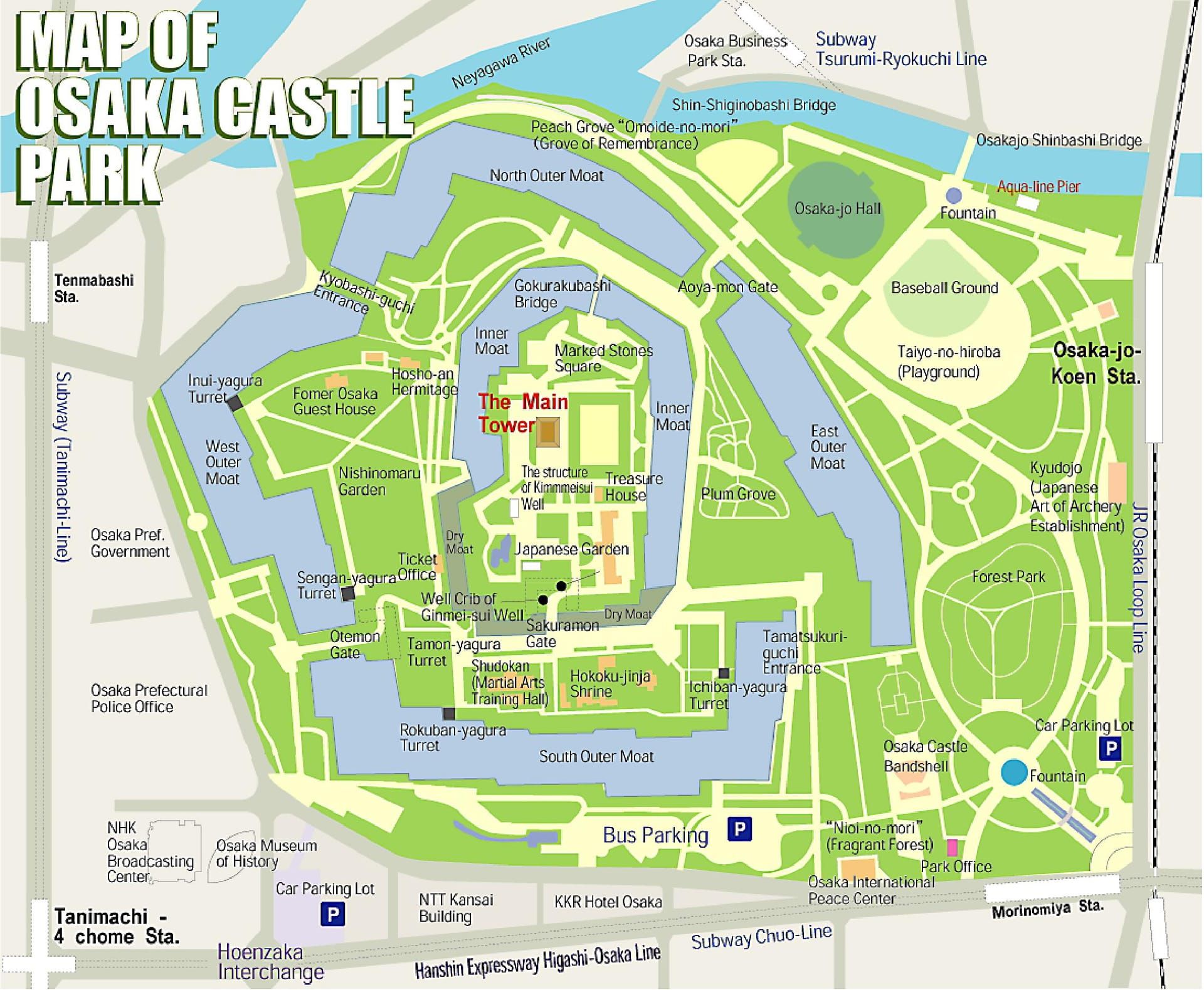
Click to enlarge the Osaka Castle map
Sample Osaka Itinerary
An Osaka itinerary covering all the popular spots in 4 days, 3 nights
Photo: Ari Helminen [CC BY 2.0] from flickr.com/photos/picsoflife/6468548225/
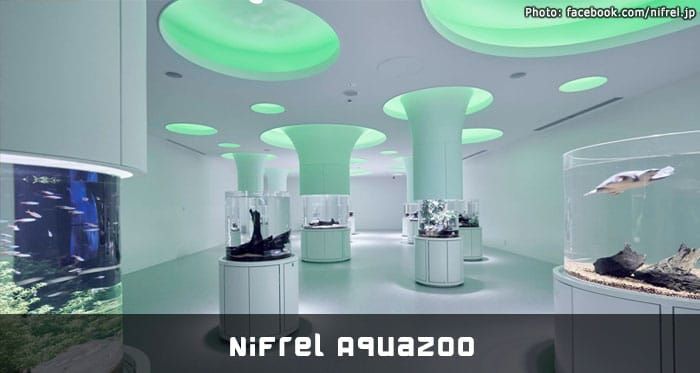
Photo: facebook.com/nifrel.jp
Afternoon: Forget traditional aquariums - Nifrel Interactive Aquazoo is a newly opened aquarium that goes far beyond ordinary animal viewing, using interactive technology to bring exhibits to life. The layout lets visitors get closer to the animals than ever, divided into 7 main zones, with a light-and-sound show in the "Wonder Moments" area and much more. You'll also find crocodiles, white tigers, pygmy hippos, lemurs, and otters. Right next door is a Pokemon Expo Gym for Pokemon fans. The aquarium is located in Expo City. To get there, switch from the subway to the Monorail at Senri-Chuo Station, then get off at Bampaku-kinen-koen Station.
photo by Type specimen From commons.wikimedia.org/wiki/File:Osaka_Dotonbori_Ebisu_Bridge.jpg( cc by 3.0 )
Evening: Take a relaxed stroll through Dotonbori, a lively and popular area in southern Osaka packed with restaurants, food stalls, and sweets. Don't miss a photo with the iconic Glico sign, a symbol of Osaka. You can get there by subway via the Midosuji, Sennichimae, or Yotsubashi Line, getting off at Namba Station.
Photo by L1NDUS from flickr.com/photos/l1ndus/32622229453/ [CC by 2.0]
Photo by Francisco Restivo from flickr.com/photos/frestivo/4793145349 [CC by-sa 2.0]
photo by Richard, enjoy my life! From flickr.com/photos/ladyous/28609912050( cc by 2.0 )
Morning: Start the day with food - stroll through Kuromon Market, known as "Osaka's Kitchen." The market offers all kinds of food to try, from full meals to light snacks and everything in between. Don't miss this market if you're visiting Osaka.
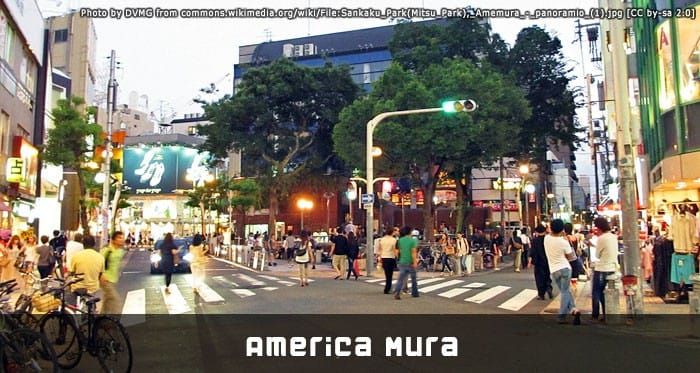
Photo by DVMG from commons.wikimedia.org/wiki/File:Sankaku_Park(Mitsu_Park),_Amemura_-_panoramio_(1).jpg [CC by-sa 2.0]
Photo by Casey Yee from flickr.com/photos/caseyyee/4278142733/ [CC by-sa 2.0]
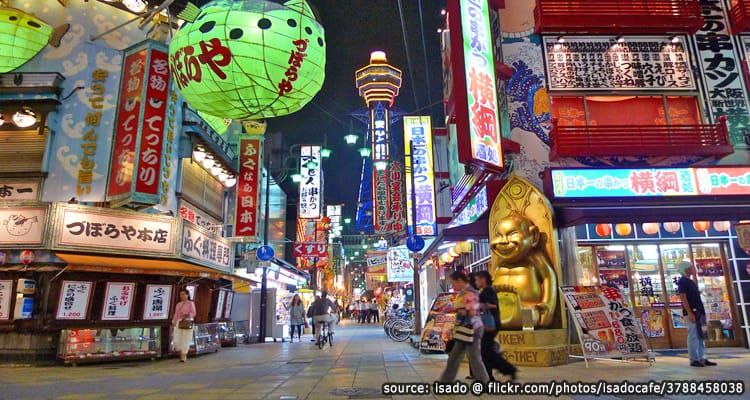
Night: Head to Shinsekai for dinner - this area comes alive with color and energy from evening into the night. Take the Sakaisuji Line subway to Ebisucho Station.
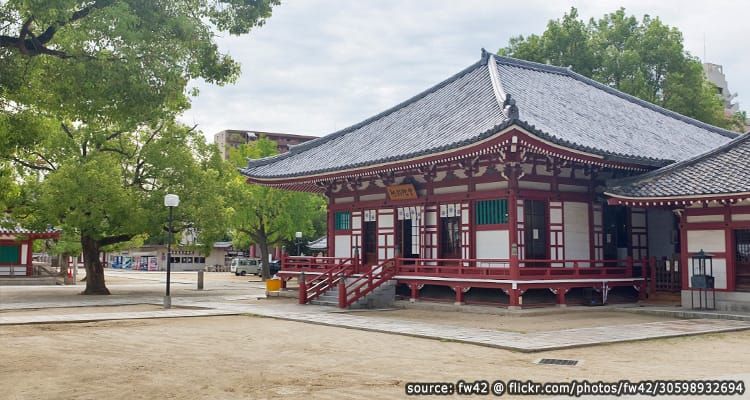
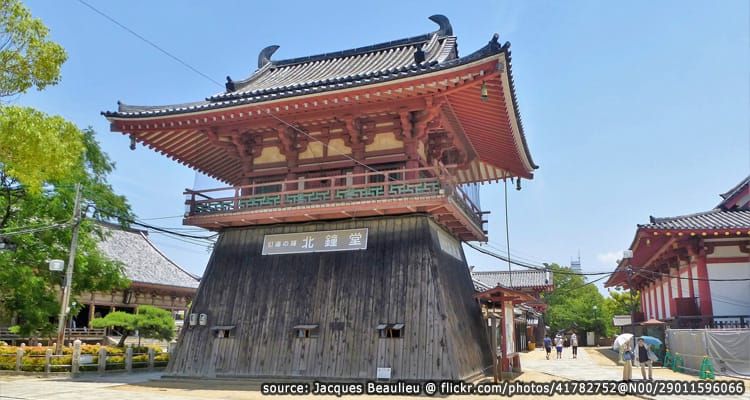
Morning+Noon: Wrap up your final day with a visit to the beautiful and peaceful Shitennoji Temple, known as the oldest temple in Japan. Admire its stunning five-story pagoda, and stop by the temple's teahouse for tea and manju sweets. The temple's Japanese garden is also worth seeing - cherry blossoms in spring, and colorful maple leaves in autumn. It makes a perfect final stop for your Osaka trip. Get there via the Tanimachi Line subway, getting off at Shitennoji-mae Yuhigaoka Station.
How to Get from Kansai Airport to Osaka
Kansai Airport is Japan's second-largest international airport, located southeast of Osaka Bay, about 5 kilometers from the coastline and roughly 60 km from Shin-Osaka Station. On the first floor of the arrival hall, there's a Kansai Tourist Information Center open daily from 9:00 AM to 7:00 PM, along with 9 banks offering currency exchange, some open from 5:30 AM to 11:00 PM. The airport has all the facilities you'd expect from a major airport, with fast and convenient transportation options connecting easily to major cities in the Kansai region, including Osaka, Kyoto, Nara, and Kobe.
▌Getting There by Train
Kansai Airport is served by two main train operators: JR (government-owned) and Nankai (private). Both are located in the same building, right next to each other, with clearly separated entrances marked by different colors - blue for JR and orange for Nankai.
JR trains run from around 6:00 AM to about 11:00 PM, with two lines available. If you want to activate your Japan Rail Pass, you can exchange your voucher at the JR information counter in the first-floor international arrivals hall, open daily from 9:30 AM to 7:00 PM, or exchange it and reserve seats at JR Kansai Airport Station.
This limited express train has spacious seating and luggage storage. From Kansai Airport, it stops at only two stations in Osaka - Tennoji and Shin-Osaka - before continuing to Kyoto Station.
To Shin-osaka Station (central Osaka): about 50 minutes, approximately ¥2,800
To Kyoto Station (central Kyoto): about 75 minutes, approximately ¥3,500
This regular rapid train stops at nearly every station along the way.
To Shin-osaka Station: about 75 minutes, approximately ¥1,400 from Kansai Airport
To Osaka Station (central Osaka): about 70 minutes, approximately ¥1,200
To Kyoto Station (central Kyoto): about 110 minutes, approximately ¥1,800
Also known as "Rapit," this limited express train is similar to JR's Haruka, distinguished by its dark blue, knight's-helmet-shaped front car. All seats are reserved, and the train offers snacks, drinks, restrooms, and luggage space. From Kansai Airport to Namba Station in central Osaka: about 40 minutes, approximately ¥1,430
This regular rapid train is similar to JR's rapid train - it stops at more stations along the way, so it takes a bit longer, but it's also cheaper. It offers snacks, drinks, restrooms, and luggage space. From Kansai Airport to Namba Station (central Osaka): about 45 minutes, approximately ¥920

In summary, if you want comfort and speed, choose a limited express train like JR's Haruka or Nankai's Rapit. If you want to save money and don't mind standing or watching your own luggage for a slightly longer ride, choose the regular rapid trains instead. The next question is which operator to choose - this mainly depends on your destination station. Here's a guide:
Choose JR if you plan to use the JR Pass, or if you're heading to Osaka Station, Umeda Station, Shin-Osaka Station, Tennoji Station, Shin-Imamiya Station, or Kyoto
Choose Nankai if you have a Kansai Thru Pass (with just an extra ¥500 reservation fee), or if you're heading to Namba Station and Shin-Imamiya Station
Transportation and Travel Passes in Osaka
Central Osaka consists of two main districts: Kita (north), around Osaka Station and Umeda Station, a major shopping and business district, and Minami (south), around Namba Station, Osaka's entertainment district. There are four main train stations:
- JR Osaka Station is located in the heart of Kita, with 2 railway companies and 3 subway lines connecting here. It's also known as Umeda Station
- Shin-Osaka Station is a Shinkansen stop located north of Osaka Station,
- In the Namba district, 3 railway companies (JR, Nankai and Kintetsu) and 3 subway lines connect at Namba Station
- The fourth main station is Tennoji Station, located southeast of central Osaka, served by JR, Kintetsu Railways, Hankai Tramway and 2 subway lines
Osaka is served by 7 railway and subway companies in total. Most international travelers rely mainly on the subway and JR West lines, while the other rail lines mostly serve outer areas and nearby regions.
1. JR West
Operates a dense rail network within Osaka. The main line is the Osaka Loop Line (similar to the Yamanote Line in Tokyo), and it also serves routes to Kansai Airport, Kobe, Kyoto, Nara and Universal Studios as well (note: the Shinkansen stops at Shin-Osaka Station)
2. Subway
Osaka has 8 subway lines covering the area inside the Osaka Loop Line, connecting the Kita and Minami districts and making travel around the city easier for visitors.
- Midosuji Line
- Tanimachi Line
- Yotsubashi Line
- Chuo Line
- Sennichimae Line
- Sakaisuji Line
- Nagahori Tsurumi-ryokuchi Line
- Nanko Port Town Line
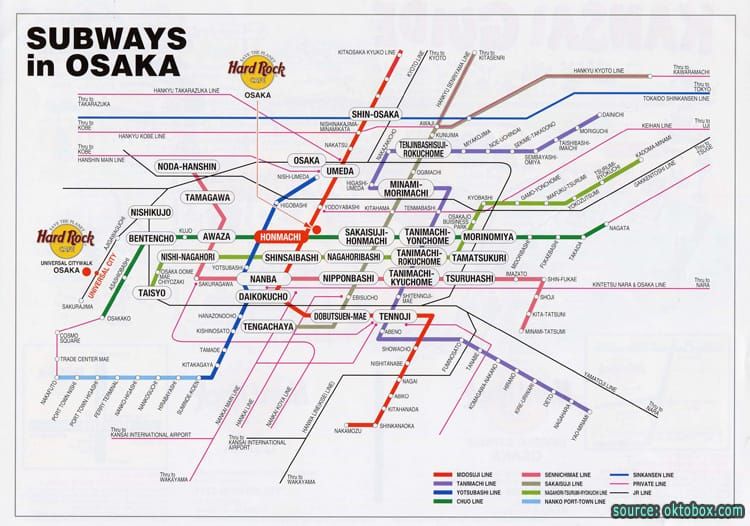
Osaka Subway Map
3. Nankai Railways
Connects Namba with Kansai Airport, Wakayama and Mount Koya
4. Hankyu Railways
Connects Umeda Station with northern Osaka, Kobe and Kyoto
5. Kintetsu Railways
Connects Osaka with other destinations in southern Kansai, such as Nara, Kyoto, Asuka, Yoshino, Ise and Nagoya, departing from Namba Station, Tennoji Station and Nagata Station
6. Hanshin Railways
Connects Osaka with Kobe, departing from Umeda Station and Namba Station
7. Keihan Railways
Connects central Osaka with central Kyoto, departing from Yodoyabashi Station and Nakanoshima Station
Types of Train Tickets and Passes in Osaka
1. Osaka Amazing Pass (1 day: ¥2,300, 2 days: ¥3,000)
Also known as the Osaka Unlimited Pass, this allows unlimited rides on trains and city buses in Osaka for 1-2 consecutive days. It also covers admission to famous Osaka attractions, such as Osaka Castle and the Umeda Sky Building.
The 1-day ticket also covers non-JR trains within the city, and is available to everyone. The 2-day ticket is sold only to foreign tourists and can be purchased at tourist information centers and travel agencies. This ticket is good value for those who want to visit attractions around the city.
2. Osaka One-Day Pass (¥800 on weekdays, ¥600 on weekends and public holidays)
This pass allows unlimited rides on the subway, city buses, and the New Tram (except the OTS Line) for one day. It can be purchased at any subway station. This pass offers great value, especially on weekends, and also comes with discounts on admission to various attractions.
3. Osaka Kaiyu Ticket - ¥2,550
This is a package ticket that includes admission to the Osaka Aquarium along with unlimited train and bus rides within Osaka city for one day. It also comes with discounts of up to 50% on attractions around Osaka Bay, such as the Tempozan Ferris Wheel, the Santa Maria cruise, the Captain Line boat, and the ferry between the aquarium and Universal City port.
*Note: This ticket is not sold at the aquarium.
1. General Rechargeable IC Cards
Osaka's rechargeable IC cards come in two types. The first is Icoca, which can be purchased from ticket vending machines at any JR station in Osaka. The second is Pitapa, a local card from a non-JR company. However, the Pitapa card works more like a credit card, making it better suited to Osaka residents than tourists.
Both Icoca and Pitapa can be used on trains and buses in Osaka (and other major cities in Japan), except for buses in Kyoto. In addition, eight other IC cards can also be used in Osaka, including Suica, Pasmo, Kitaca, Toica, Manaca, Sugoca, Nimoca, and Hayakaken.
2. Surutto Kansai Rainbow Card (¥1,000, ¥2,000, and ¥3,000)
This is an older-style prepaid card that cannot be recharged. Instead of tapping at the gate, you insert the card. It can still be used on trains and buses within Osaka city, **except JR trains.
The one advantage this card has over Icoca is that it can be used on buses in Kyoto.
Note: The Surutto Kansai Card goes by different names depending on the issuing company. For example, on Hankyu it's called the Lagare Card, on the Osaka subway it's called the Rainbow Card, and on the Kyoto subway it's called the Miyako Card.
There is also a combined ticket for the airport limited express train and the Icoca IC card, called the Icoca & Haruka ticket, which offers a discount on round-trip tickets on the limited express train between Kansai International Airport and Osaka city.
Great Cities to Visit Near Osaka
Although Osaka has plenty of attractions within the city itself, many visitors planning a trip to Japan may want to venture beyond the big city to explore smaller, quieter towns. Here are some great cities to visit around Osaka, all easily reachable as a day trip.
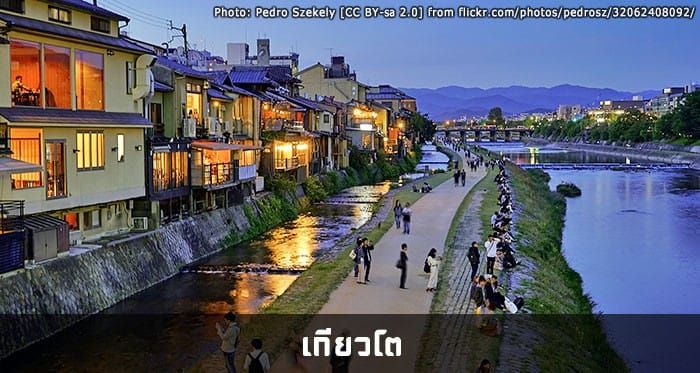
Photo: Pedro Szekely [CC BY-sa 2.0] from flickr.com/photos/pedrosz/32062408092/
Access
Take the Shinkansen from Shin-Osaka Station to Kyoto Station (about 30 minutes).
24 Must-Visit Attractions in Kyoto
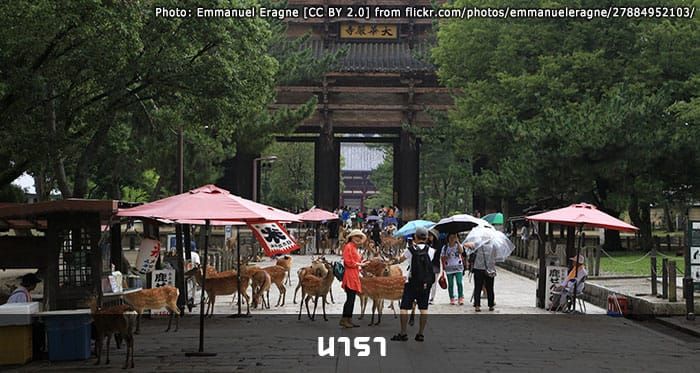
Photo: Emmanuel Eragne [CC BY 2.0] from flickr.com/photos/emmanueleragne/27884952103/
Access
Take the train from Osaka Station to Nara Station (about 51 minutes), or to Kintetsu-Nara Station (about 55 minutes).
5 Must-Visit Spots in Nara You Can See in One Day
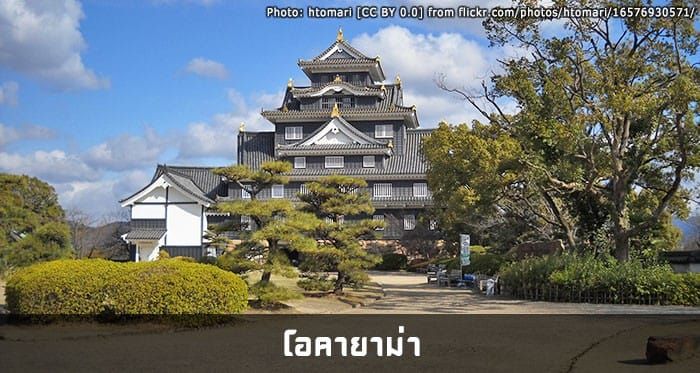
Photo: htomari [CC BY 0.0] from flickr.com/photos/htomari/16576930571/
Access
Take the Tokaido-Sanyo Shinkansen from Shin-Osaka Station to Okayama Station (about 1 hour).
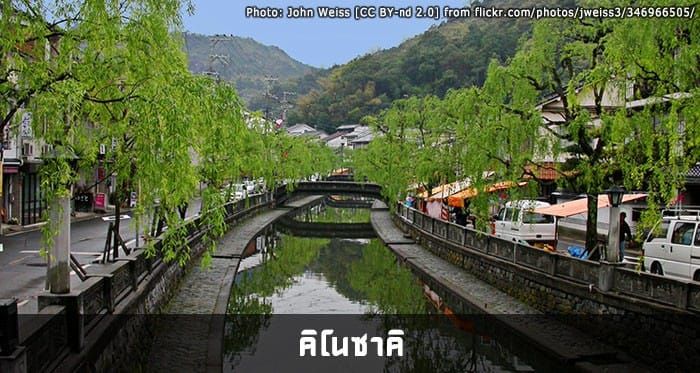
Photo: John Weiss [CC BY-nd 2.0] from flickr.com/photos/jweiss3/346966505/
Access
Take the JR Limited Express Kounotori from Shin-Osaka Station to Kinosaki Onsen Station (about 2.5 hours).
Other Things to Know About Traveling in Japan
- Internet connectivity: You can use a data-only SIM card, or a Pocket WiFi device, which can be shared among several people.
- Travel insurance: There are many providers to choose from, differing mainly in price, coverage, and claims process. Policies can be purchased online, through an agent, or directly from the insurer.
- Visa requirements: Visa rules vary by nationality, so check the current requirements before your trip.