


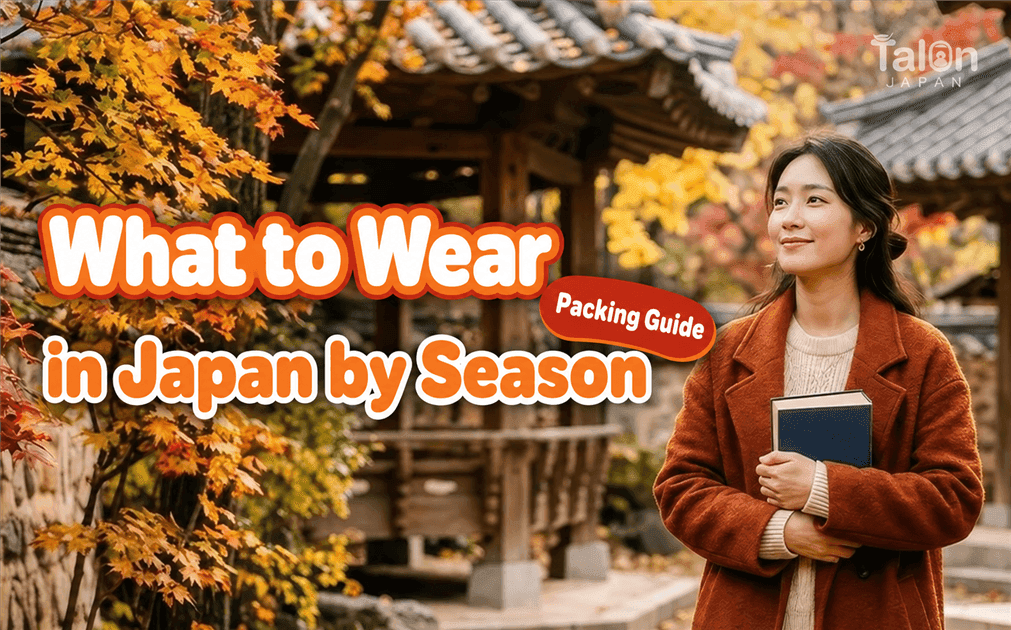







For fashion lovers and travelers who enjoy taking photos, what you wear matters. What to pack for Japan depends on the region you visit, not only on the month or season. In January, Sapporo in Hokkaido averages -3°C while Fukuoka averages 7°C, a gap of 10 degrees. For cities like Tokyo or Osaka, three layers will get you through most of the winter. If you head north to Hokkaido, be ready for double-digit minus temperatures on the coldest nights.
Most winter clothes and cold-weather items are better value bought in Japan than packed from home, because shops there offer discount coupons for tourists, and you can get a tax refund too. Some things, though, are best brought from home. Here, Talon Japan explains in detail what to wear in Japan.
Same Month, Different Regions: How Cold Does It Get?
The average monthly temperatures of four popular destinations differ most in winter (10 degrees in January) and less in summer (7 degrees in August).
Month | Sapporo (Hokkaido) | Tokyo | Osaka | Fukuoka |
January | -3°C | 5°C | 6°C | 7°C |
February | -3°C | 6°C | 7°C | 8°C |
March | 1°C | 9°C | 10°C | 11°C |
April | 7°C | 14°C | 15°C | 15°C |
May | 13°C | 19°C | 20°C | 20°C |
June | 17°C | 22°C | 24°C | 23°C |
July | 21°C | 26°C | 28°C | 27°C |
August | 22°C | 27°C | 29°C | 28°C |
September | 19°C | 23°C | 25°C | 25°C |
October | 12°C | 18°C | 20°C | 20°C |
November | 5°C | 13°C | 14°C | 14°C |
December
| -1°C | 8°C | 9°C | 9°C |
Look at August: Sapporo is 22°C while Osaka is 29°C. If one trip covers both, pack short-sleeved tops and a jacket.
These figures are monthly averages. Nights are always colder.
In January, nights average about 1°C in Tokyo and about -6°C in Sapporo.
For more on the weather in each area, see:
What to Wear in Winter (December to February)
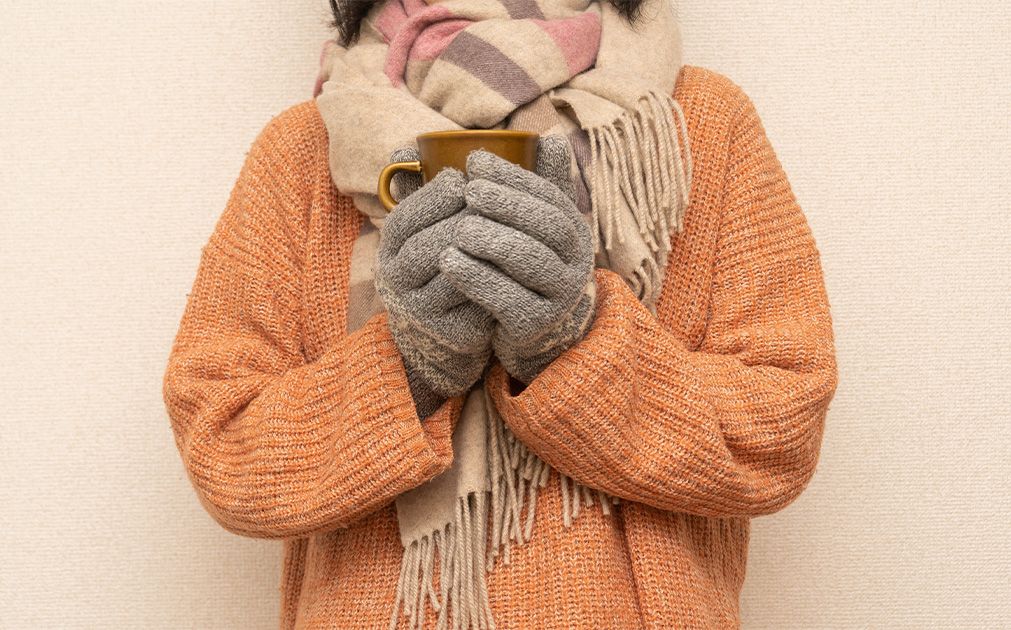
The basic rule is three layers: a close-fitting base layer that absorbs sweat, a warm mid layer such as fleece or a light down jacket, and an outer layer that blocks the wind. It is the wind that makes you cold, not the number on your weather app.
Tokyo's January average of 5°C sounds manageable. But when you wait at a crossing with wind blowing between the buildings, it feels several degrees colder.
In cities like Tokyo, Osaka or Fukuoka, these three layers and a scarf are enough for a full day of sightseeing.
Hokkaido needs more preparation, because it is much colder than Tokyo. In Sapporo, January and February average -3°C, and on the coldest nights it can drop below -10°C. You may need a heavy coat, gloves, a scarf and shoes with soles that grip on snow so you can walk safely.
If you feel the cold easily, add thick socks and a hat that covers your ears. Both are inexpensive and easy to find in shops in Japan.
Do You Need HEATTECH? Pack It or Buy It in Japan?
Thermal base layers are a must for Hokkaido, and for every city in January and February. For city trips in November or March, when it is 9-14°C, a regular long-sleeved T-shirt and a jacket are enough.
The next question is always whether to bring them from home. Here is our answer.
Bring from home: things that take time to fit, or that you need as soon as you leave the airport, such as your first set of thermal base layers, comfortable shoes you have already broken in, and thick socks. You don't want to spend the first half day of your trip looking for a clothes shop.
Buy in Japan: coats, down jackets, snow gear, and extras like gloves and heat packs. Japan has a much wider choice of serious cold-weather gear, and large stores offer tourist discount coupons plus a tax refund. You also don't have to carry the extra weight in your suitcase.
What to Wear in Spring (March to May)
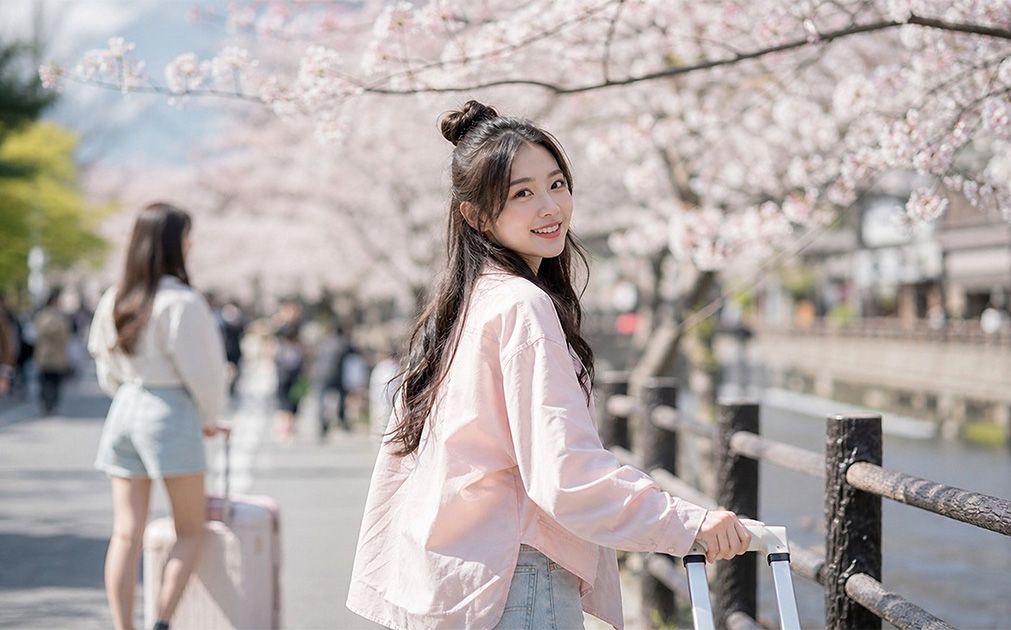
Temperatures rise fast in spring. Tokyo goes from 9°C in March to 19°C in May.
It is the easiest season of the year to dress for. A long-sleeved top, long pants and a jacket you can fold into your bag make a look that works for sightseeing and photos on almost any day.
Hokkaido is more than a month behind: cherry blossoms in Sapporo usually open around May 1, compared with about March 24 in Tokyo. Sapporo still averages just 1°C in March, and nights are below zero. If you go to see the cherry blossoms in Hokkaido, bring cold-weather items too. A pretty spring outfit for Tokyo may not be warm enough.
What to Wear in Summer (June to August)
Summer is hot and humid. Osaka averages 29°C in August, and the humidity makes some days feel even hotter.
Light, breathable clothes, a folding umbrella and a small sweat towel like the ones Japanese people carry are three items you will use every day.
In summer, Sapporo is around 26°C in the daytime, but nights are cool and it rains on about one day in three in August. Keep a light jacket and a raincoat in your bag.
Also carry a light layer during the day. Some restaurants, department stores and shops run the air conditioning very cold, and you can easily get chilled.
What to Wear in Autumn (September to November)
September is still hot, and in many cities it is the month with the highest risk of typhoons. Pack a raincoat for peace of mind.
October is pleasant, at 18-20°C in the big cities. By November, when the leaves change color, Tokyo drops to 13°C and Sapporo to 5°C.
This is the hardest season to dress for, because days and nights are so different. The easiest approach is a shirt or a thin sweater, plus a jacket and a thick scarf to put on in the evening.
Where to Buy Winter Wear in Japan
Popular shops with tourists, and their discount coupons
Shop | Best for | Coupon discount |
Ski and snowboard wear, snow gear | 5% off + 10% tax refund | |
Outdoor winter jackets | 5% off + tax refund | |
Gloves, socks, heat packs, small items | Up to 7% off | |
Casual travel clothes | 10% off + 10% tax refund | |
Everything in one building | Up to 17% in total |
The latest discount rates and conditions are on each shop's coupon page. Save them on your phone before you fly, because some shops ask you to show the coupon when you pay. From November 1, 2026, you pay the full price, including tax, in the shop. The tax is refunded after a customs check at the airport when you leave Japan.
FAQ
How many layers do I need for Japan in winter?
For cities like Tokyo, Osaka and Fukuoka, wear three layers: a close-fitting base layer to absorb sweat, a warm mid layer and a windproof outer layer.
Sapporo in Hokkaido averages -3°C in January, so add a heavy coat, gloves, a scarf and non-slip shoes.
Sidewalks with packed snow are much more slippery than you expect.
How much colder is Hokkaido than Tokyo?
In January, Sapporo averages -3°C and Tokyo 5°C, a difference of 8 degrees.
On the coldest nights, Sapporo can drop below -10°C, while Tokyo drops below 0°C on about 8 nights in January.
The same outfit will not work in both places, so always pack for the colder destination.
Is it better value to buy winter clothes in Japan?
Yes, for bulky items like coats and snow gear: the choice is wider, and you get discount coupons and a tax refund. But bring your first set of base layers and your shoes from home, because you need them as soon as you land.
Is Japan cold in April?
In April, Tokyo averages 14°C and Osaka 15°C. Long sleeves and a light jacket are enough.
Sapporo is 7°C in the same month and much colder at night, so you still need a warm jacket.
In spring, always check your destination before deciding what to wear.
What should I bring for summer in Japan?
A folding umbrella, a sweat towel and a light cover-up for air-conditioned places.
Osaka averages 29°C in August with high humidity, so long walks outdoors are more tiring than you expect.
Sapporo is 22°C in the same month, with cool nights and rain on about one day in three, so pack differently for it.
---
Average monthly temperatures are Japan Meteorological Agency normals (1991-2020), rounded to the nearest degree.
Coupon discounts and conditions were checked on October 22, 2026 and may change. See each shop's coupon page for the latest details.
– Written by Talon Japan